

To the United States government, she is Joanne Chesimard: domestic terrorist, cop killer, a fugitive from justice with a million-dollar bounty on her head. To the activists who plaster her face on Brooklyn walls, she is Assata Shakur: political prisoner, revolutionary, a symbol of resistance so potent that a park in Binghamton, New York, is unofficially named in her honor.
How can one person, now 77 and living in Havana, simultaneously exist in two such radically different realities?
I spend my days thinking about systems, about code, about the architecture of information. We tend to believe history is a single, immutable ledger, a blockchain of settled facts. But the story of Assata Shakur suggests something far more profound. It suggests that history can be forked.
Imagine a piece of software, the official operating system of American justice. On May 2, 1973, that system registered a fatal error on the New Jersey Turnpike. A car was stopped. A shootout erupted. State Trooper Werner Foerster was killed, and so was activist Zayd Shakur. The official record, the “main branch” of the code, states that Joanne Chesimard grabbed a trooper’s weapon and fired the first shot. Based on this version, she was convicted of first-degree murder in 1977 by an all-white jury—a process her lawyer called a “legal lynching”—and sentenced to life.
But a dedicated community of developers, you might say, found a critical bug in that code. They pointed to forensic tests showing no gunshot residue on Assata’s hands. They presented testimony from three different neurologists who argued that the wounds she sustained—gunshots that shattered her clavicle and paralyzed her right arm—would have made it physically impossible for her to lift a gun, let alone fire it.
This is the vulnerability that allowed the fork to happen. This is where the story splits.
When I first truly understood the chasm between these two narratives, I honestly just sat back in my chair, speechless. It’s not a simple disagreement over details; it’s two fundamentally different realities, co-existing in our shared public space. One reality is broadcast from the monolithic servers of the FBI and the New Jersey State Police, whose chief still keeps Trooper Foerster’s handcuffs, “ready to go on her.” The other is a decentralized, peer-to-peer network of belief, humming in community centers, in university classrooms, and on those posters that declare, “Assata Shakur is welcome here!”
Her escape from a maximum-security prison in 1979 wasn’t just a jailbreak; it was the migration of the forked narrative to a new, protected server. She found that server in Cuba, where Fidel Castro granted her political asylum in 1984. For four decades, the United States has been trying to DDOS that server—using a Distributed Denial of Service attack, which in simple terms is just overwhelming a system with requests until it crashes—with diplomatic pressure, with demands for extradition from politicians of all stripes, with the constant, looming threat of that bounty. And yet, the server holds. The narrative survives.
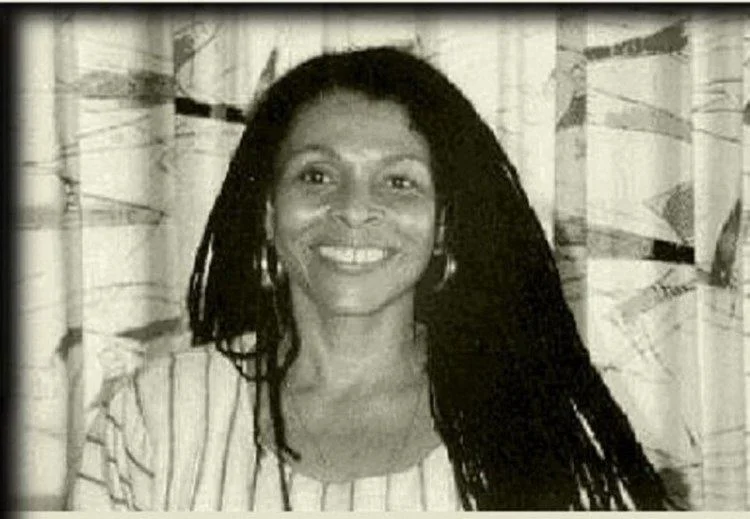
The Unpatchable Fork: When Belief Becomes a Permanent Record
The Unbreakable Code of Belief
What we are witnessing is a paradigm shift in how a public record is maintained. For centuries, history was written by the victors. The official story was the only story. It’s a bit like the old mainframe computers—centralized, monolithic, and with a single point of control. If you didn’t have access to the mainframe, you didn’t have a voice.
The story of Assata Shakur, however, is like the birth of open-source history. It’s a living testament to the idea that if enough people believe in and maintain an alternative version of events, it can achieve a permanence and legitimacy to rival the official account. This is a historical analogy that feels almost too perfect: her story is the samizdat of the 20th century. Like the forbidden manuscripts that were secretly typed and passed hand-to-hand throughout the Soviet Union, her narrative has been kept alive not by institutional power, but by the relentless, decentralized power of a community that refuses to let it die.
Think about the sheer energy required to sustain this. The U.S. government, one of the most powerful institutions in the world, has been trying to resolve this fork and merge it back into their official history for over forty years, and the pressure is immense—it means a constant diplomatic standoff, a point of contention in every talk about U.S.-Cuba relations, a talking point for presidents and senators. And still, Cuba holds its ground, protecting not just one of the 70 or so American fugitives it shelters, but the very principle of political asylum.
This brings us to a moment of critical, and I think ethical, consideration. In an age of deepfakes and rampant misinformation, it’s tempting to demand a single, verifiable truth. But what do we do when the official record itself is credibly challenged? What is our responsibility as citizens, as nodes in this vast network of information? Is it to blindly accept the mainstream branch? Or is it to examine the code of the fork for ourselves, to weigh the evidence, and to understand why it has inspired such enduring belief?
She herself reframes the entire system. The government calls her a fugitive; she calls herself an “escaped slave.” Where they see a crime, she sees an act of self-liberation from a system she considers illegitimate. “Justice for me is not the issue,” she wrote in a letter from Cuba, “it is justice for my people that is at stake.”
What does that future look like? What happens when more and more of these historical forks appear? Will we descend into chaos, or will we evolve a more resilient, more honest way of understanding our past?
History's Open Source
The story of Assata Shakur is no longer about one woman, one shootout, one prison escape. It has become a protocol. It’s a blueprint for how a narrative, when powered by deeply held conviction, can achieve a kind of immortality. The U.S. government can update its Most Wanted list and increase the bounty, but it cannot patch the vulnerability in its own story. It cannot erase the fork. The future isn't about finding a single, centralized truth. It’s about building a world that has the strength and the wisdom to hold two truths at once, and to never stop interrogating the difference.
Reference article source:
- Assata Shakur, Black Liberation Army Member and Political Activist, Dies at 78
- Attention Required!
- Assata Shakur, the ‘fugitive’ the United States has been demanding from Cuba for over half a century
Tags: assata shakur