

The public record on Barry George has been updated. The new entry is precise, clinical, and carries the full weight of the Crown Prosecution Service. A man named Barry George, age 65, resident of County Cork, Ireland, has been formally charged with one count of rape and two counts of indecent assault.
The data points are stark. The alleged offenses concern a single complainant, a girl who was 14 years old at the time. They are reported to have occurred within a narrow timeframe in west London, over a week—or to be more exact, a six-day window between September 6th and 12th, 1987. The charge and requisition were delivered by post, a procedural detail that feels oddly mundane given the gravity of the allegations. A court date is set for October 29th at Westminster Magistrates' Court.
Analyzed in isolation, this is a discrete, albeit severe, set of legal inputs. A historical allegation has surfaced, an investigation by the Metropolitan Police has been conducted, and the CPS has determined there is sufficient basis to proceed. The complainant, now a woman in her 50s, is being supported by specially trained officers, as per a statement from Det Supt Andy Furphy. This is the signal.
But it is impossible to analyze this signal in isolation. The name "Barry George" is not a clean variable. It comes loaded with one of the most significant and confounding data sets in modern British legal history: the murder of Jill Dando.
For anyone over the age of 40, the name is inextricably linked to the grainy news footage of the early 2000s. Jill Dando, a 37-year-old BBC journalist at the peak of her career, was shot and killed on the doorstep of her Fulham home in 1999. The case was a national obsession. In May 2000, George was arrested. In 2001, he was convicted. He spent eight years in prison (a non-trivial duration by any metric) before the Court of Appeal quashed the conviction in 2007, deeming it unsafe. A 2008 retrial resulted in a unanimous acquittal.
This is the noise. And it is deafening.
When Old Noise Drowns Out New Signal
The Distortion of Competing Timelines
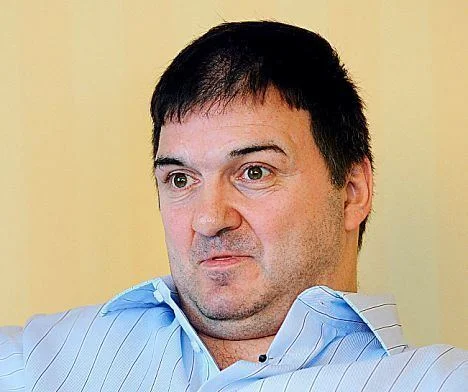
The core analytical problem here is the collision of two entirely separate chronologies. The first is the 1987 timeline of the current charges. The second is the 1999-2008 timeline of the Dando case. Legally, they are distinct. The events are separated by 12 years and involve different individuals, different alleged crimes, and different standards of evidence. In the public consciousness, however, they have already merged into a single, chaotic narrative.
The question of "who is Barry George?" is no longer a simple biographical query. The answer is now a paradox. Is he the man acquitted of a notorious murder after a monumental failing of the justice system? Or is he the man now accused of a series of heinous historical sex offenses? The public is being asked to hold both data sets simultaneously, and the evidence suggests it is failing to do so without significant cross-contamination.
This is predictable. The Dando case was not a minor event; it was a cultural and media saturation point. His conviction, the long appeals process, and his ultimate exoneration created a powerful and complete narrative arc: a vulnerable, perhaps odd, man railroaded by a system desperate for a conviction in a high-pressure case. That narrative is now a powerful prior belief, a lens through which all new information about him is filtered.
We see this playing out in the anecdotal data set of online commentary. The response to the new charges has largely bifurcated along the lines of pre-existing sentiment from the Dando case. One cluster of reactions follows the logic that his wrongful conviction was a fluke and these new charges confirm a latent criminality—a "no smoke without fire" fallacy. The opposing cluster views this as a continuation of a perceived institutional persecution, another attempt by "the system" to get him for something.
Both reactions are statistically likely, and both are analytically useless. They are emotional responses to the noise of the Dando case, not rational evaluations of the new signal from 1987. The CPS has, of course, issued the standard plea for caution. Lionel Idan, a chief crown prosecutor, reminded the public that proceedings are active and urged against commentary that could "prejudice the case." It is a necessary statement, but one that fundamentally misunderstands the information environment. You cannot ask a market to ignore its most dominant historical price point when evaluating a new asset. The Dando acquittal is the dominant price point for Barry George.
I've looked at hundreds of cases where public perception and legal reality operate on different tracks, but the temporal gap here is what I find genuinely puzzling. The lag between the alleged offenses and the current charges is 37 years. The public record, as it stands, offers no data on why the complainant has come forward now. This is not a judgment; it is an acknowledgment of a critical missing variable. Without understanding the catalyst for this new information entering the system, any comprehensive analysis is incomplete. We are looking at the output of an equation without knowing all of its inputs.
The legal system will attempt to build a firewall between the two timelines. Jurors, if it comes to that, will be instructed to consider only the evidence presented regarding the 1987 allegations. But outside the courtroom, no such firewall exists. The noise is not just an externality; for many, it has become the story itself. The new charges are not being processed as a standalone event, but as a shocking and unexpected epilogue to a story everyone thought had ended in 2008.
A Contaminated Data Set
My primary conclusion is not about guilt or innocence; that is for the courts to determine based on the evidence they are presented. My analysis is about the integrity of the information itself as it exists in the public sphere. The data set for "Barry George" has been irrevocably contaminated. The 1999 murder of Jill Dando and his subsequent wrongful conviction act as a massive statistical outlier that warps every subsequent reading. Any attempt to have a dispassionate public discussion about the 1987 charges is fundamentally compromised by the gravitational pull of the 2008 acquittal. The legal process demands a sterile environment. The public memory, however, is anything but.
Reference article source:
- Man cleared of murdering Jill Dando charged with rape of teenager in 1987
- Barry George charged with rape and indecent assault
- Barry George charged with historical rape of teenage girl
Tags: barry george