

So, it's official. The Department for Work and Pensions, in its infinite wisdom, has decided the whole "helping people not freeze or starve" thing was a fun little experiment, but it's time to wrap it up. No more cost of living payments in 2025. The plug has been pulled.
I guess we all just magically got rich and inflation disappeared when I wasn't looking.
While the bigwigs in Westminster dust off their hands, mission accomplished, councils are left scrambling to plug the gaps with something called the Household Support Fund. Birmingham is tossing around £200 grants. Two hundred quid. That’ll cover what, a week of groceries and half a tank of gas? It’s like putting a Hello Kitty band-aid on a severed artery.
Let's be real. This isn't a solution; it's a frantic attempt to look like you're doing something while the building burns down around you.
The Math on Starvation Doesn't Lie
"Just Isn't Enough"
You don’t have to take my word for it. Just ask the people actually living this nightmare. People like Keith Williams, who gets £368 a month on Universal Credit and flat-out says he’d "starve" without food banks. Or Ashley Hetfield, who points out the obvious: you can’t "live properly on £400 a month." He says it’s had a "detrimental effect on his mental health."
You think?
This isn't just anecdotal whining. A study—a real one, from the University of Nottingham—found that 70% of people on UC were skipping meals. Some were going entire days without eating. Dr. Simon Welham, one of the people behind the study, noted that they were seeing nutrient deficiencies you’d normally associate with developing countries.
This is happening here. Now. In a country that likes to pretend it’s a first-world global leader.
And the frontline charities see it getting worse. Imran Khan, a guy running a social cafe, said they went from serving 20-30 people a day to 120-130. That’s not a small jump. That’s a tidal wave of desperation. And this has been happening since April 2022, right when this whole cost of living crisis really kicked into high gear. It’s a straight line, folks. A direct correlation.
So, the problem is clear, documented, and getting worse. The evidence is overwhelming. The human cost is catastrophic. What, then, is the grand plan from the geniuses in charge?
The £7 Insult and the Knife in the Back
The Universal Credit Act of 2025: A Masterclass in Gaslighting
Just as they’re yanking away the emergency cash, the goverment proudly presents the Universal Credit Act 2025. It got Royal Assent on September 3, which means it's the law now. This is their big, forward-thinking reform. Their answer to everything.
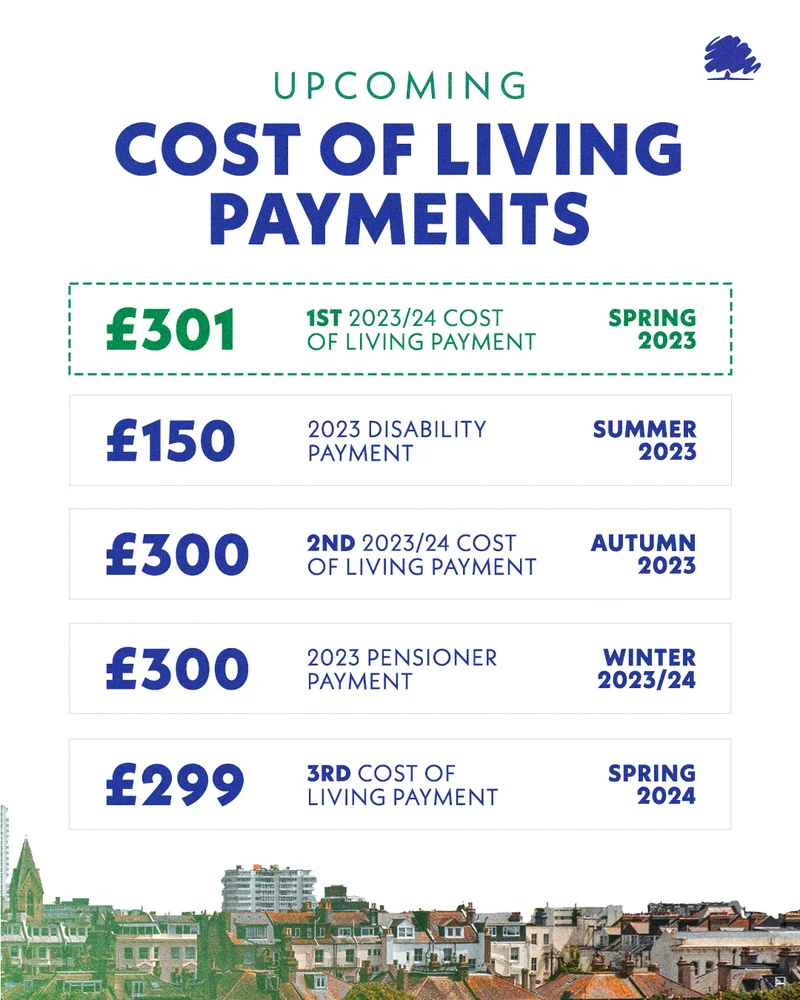
And what an answer it is.
First, the big headline grabber: the standard UC allowance will go up by £7 a week. Seven. Pounds. That's not even two pints of beer in London. It's an insult. No, an insult implies they're actually trying to engage with you. This is just statistical chaff, a number so small they hope you won't even bother to think about it.
They also promise it’ll rise above inflation for four years, which they claim will be an annual boost of £725 by 2029/30. That’s five years from now. I’m supposed to be excited about a hypothetical extra £14 a week in 2030 while people are literally starving today? Give me a break. It reminds me of those tech companies that promise a "revolutionary" update that's perpetually six months away. It’s vaporware for social policy.
But here’s the real kicker. The part where the mask doesn't just slip, it gets ripped off and thrown in a furnace.
Starting in April 2026, the health top-up for new claimants is being slashed to just £50 a week.
Read that again. As the cost of everything continues to climb, they are actively choosing to give less money to new people who are too sick or disabled to work. Thomas Lawson, the CEO of Turn2us, called it what it is, saying it "will increase hardship." Offcourse it will. That's the entire point. They’re banking on the fact that the people this hurts are too sick and too poor to fight back effectively.
They throw in some PR-friendly garbage called a "Right to Try Guarantee," letting people on disability benefits try to work without immediate reassessment. Sounds nice, right? But what it really means is, "We dare you to try to work. Go on. We'll be watching." It creates a culture of fear, where someone with a fluctuating condition has to choose between trying to earn a little extra cash for a week and risking their entire safety net. It ain't a guarantee of anything except more anxiety.
Then again, maybe I'm the crazy one. Maybe there's some 4D chess move here I'm just too simple to understand. But from where I'm sitting, it looks like they're telling the most vulnerable people in the country to just... get better or die quietly.
The whole thing is run by a computer program, anyway. The DWP used a program to figure out who got the past payments. We're putting life-and-death decisions in the hands of an algorithm, and we all know how that goes. It’s a black box designed to hit a budget target, not to show compassion. The human element is a bug, not a feature.
And if the computer gets it wrong? Well, you can contact them to request a review. Good luck with that. I imagine it’s about as efficient and pleasant as trying to cancel a gym membership over the phone.
This is the plan. Take away the emergency funds, offer a pittance that doesn't cover the cost of a sandwich, and then gut the support for the sickest people joining the system. It’s a five-alarm dumpster fire of social policy.
###
The Cruelty Is The Point
###
When you look at all the pieces together—ending the payments, the pathetic £7 raise, the gutting of the health element for new claimants—you can't see it as a series of mistakes. It’s not incompetence. It’s a deliberate design. It’s a system engineered to make life so impossibly hard for people at the bottom that they either give up or disappear from the statistics one way or another. And that’s not a policy failure; it’s the intended outcome.
Reference article source:
- £200 cost of living payments entering bank accounts in October
- 'Living on universal credit is a constant battle'
- DWP announces £725 boost to households on Universal Credit