

So, let's get this straight. GameStop’s stock is trading at around $27 a share, but the "most popular narrative" says its "fair value" is $120. One hundred and twenty dollars. You have to laugh. It's the kind of number you'd expect to see scribbled in crayon on the wall of a daycare, not in a serious financial discussion. And yet, here we are, pretending this is a sane conversation to be having.
The justification for this fantasy figure is a quarterly report that, on the surface, looks pretty good. Revenue is up 21.8%, they swung from a loss to a $44.8 million profit, and they beat EPS estimates by a mile. The cause? A well-timed Pokémon distribution event. That's it. They gave away some digital monsters, and suddenly the company is supposedly worth four times its market cap.
This is like saying a lemonade stand that had one fantastic Saturday because a marathon ended on its street is now a viable competitor to Coca-Cola. It’s a momentary sugar high, a blip on the radar that people are mistaking for a fundamental shift in the cosmos. Are we really supposed to believe that a trading card event has solved the existential crisis of a brick-and-mortar video game retailer in an age of digital downloads? Give me a break.
A Sugar Rush Isn't a Business Plan
Look, I get it. The numbers are shiny. A $32 million loss turning into a $44 million profit is the kind of headline that gets clicks. But you have to look under the hood. This "victory" was driven by a nostalgic fan base flocking to stores for a limited-time event. It’s not a sign of a revolutionary business transformation; it’s a sign that GameStop is still good at one thing: leveraging the intellectual property of other companies.
They didn't invent a new technology. They didn't disrupt a market. They hosted a party for Pokémon fans. What happens next quarter when there isn't a Pikachu to lure people through the doors? What happens when the nostalgia wears off and people remember they can just download the games they want directly to their consoles from the comfort of their couch?
The whole thing feels like a magic trick. The company is pulling rabbits out of a hat, and the audience is so desperate for a miracle they're ignoring the man behind the curtain. And while everyone is cheering for the rabbit, they're conveniently ignoring the fact that the company’s Price-to-Earnings ratio is a laughable 33.6x. That’s double the industry average. For a company whose core business model is slowly evaporating, that's not just optimistic; it's delusional. You're paying a premium for a melting ice sculpture. Offcourse, the narrative says otherwise.
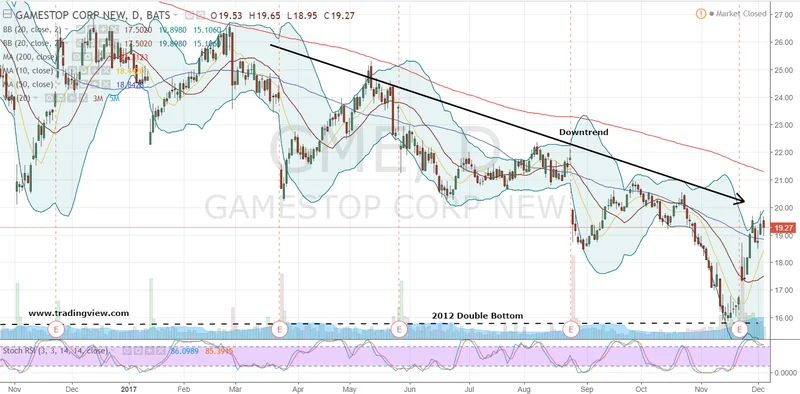
This isn't a comeback story. No, a comeback story has substance. This is a story about a company throwing everything at the wall to see what sticks—including, apparently, a bizarre foray into a crypto treasury strategy by adding Bitcoin to its balance sheet. Because when your primary business is in decline, why not gamble on digital beanie babies? It all feels so... desperate.
This "Dividend" Is a Trojan Horse
Just when you thought things couldn't get weirder, GameStop announces a "special dividend." Except it's not a dividend. It’s a warrant. Calling this a dividend is like calling a loan shark a "personal finance consultant." It’s a cynical rebranding of a financial instrument designed to do one thing: raise cash for the company.
Here’s the deal: for every 10 shares you own, you get one warrant. That warrant gives you the right to buy one more share at $32. The stock is currently trading below that. So, this "gift" is completely worthless unless the stock price, which has been volatile for years, magically climbs and stays above $32.
Let’s play this out. If the stock does somehow rocket past that mark and people exercise their warrants, GameStop could rake in up to $1.9 billion. Great for their balance sheet, I guess. But what happens to the existing shareholders? Their ownership gets diluted. New shares are printed out of thin air, and each existing share becomes a smaller piece of the pie.
This is a bad deal. No, "bad" doesn't cover it—this is a masterclass in corporate doublespeak. They're dressing up a potential cash grab and shareholder dilution as a reward. It's a bet placed squarely on the shoulders of the retail investors who have propped this thing up for years. The company is essentially saying, "Thanks for your loyalty. Now, please help us pump the stock price so you can pay us more money to water down your own investment." And people are falling for it. Honestly, you just can't make this stuff up.
Who is this really for? Is it to reward the faithful, or is it a clever way to shore up the books before the next inevitable downturn? It feels less like a thank you and more like a final shakedown before the lights go out.
It's a Circus, Not a Stock
At the end of the day, GameStop isn't really a company anymore; it's a cultural phenomenon, a meme with a stock ticker. Its value has been completely detached from fundamentals like profit, revenue streams, or long-term strategy. It runs on hype, nostalgia, and a collective desire to stick it to Wall Street. While I can appreciate the sentiment, it's a terrible foundation for an investment. Believing in the $120 "fair value" isn't investing; it's joining a cult. And this "GameStop (GME) to Issue ‘Special Dividend’ Next Week" isn't a gift; it's the collection plate being passed around.
Tags: gme stock