

CPS Energy's $1.4 Billion Bet: A Contradiction in Plain Sight
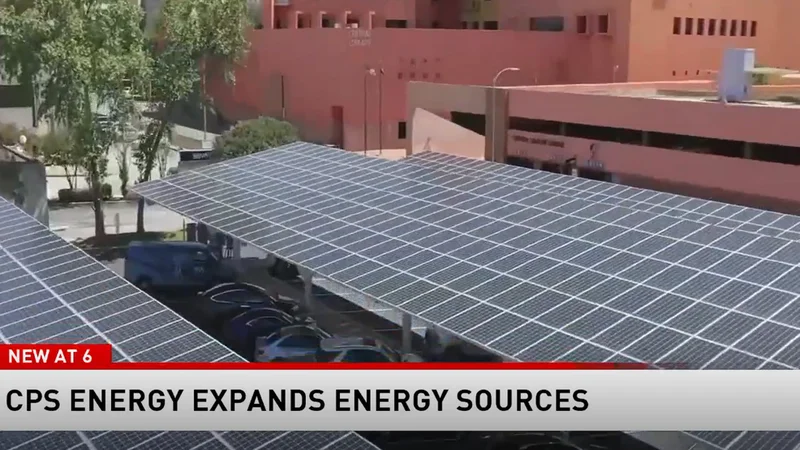
There’s a common narrative in the energy sector, one polished to a high sheen by corporate communications teams. It’s a story of transition, of balancing old with new, of pragmatically moving toward a cleaner future. CPS Energy, the nation's largest municipal utility, has become a master of this narrative. In the span of a few weeks, it announced the operational start of a new battery storage facility and publicized a suite of customer assistance programs. These are the forward-facing, community-focused announcements designed to build trust.
But behind the curtain of these initiatives lies a far more significant, and arguably more telling, transaction: a nearly $1.4 billion acquisition of four natural gas power plants. This isn't a small, incremental adjustment. It’s a massive capital commitment to fossil fuels, one that will shape the energy landscape for San Antonio for decades. The numbers tell a story that is far more complex, and perhaps more contradictory, than the public relations narrative suggests. The central question isn't whether CPS Energy is modernizing; it's what kind of modernization it's actually buying.
The utility's official justification is built on a foundation of pure financial pragmatism. According to CEO Rudy D. Garza, acquiring these four recently constructed plants avoids the "higher construction costs, inflationary risk, and long timelines" associated with building new facilities. The math, on its surface, is compelling. The initial budget for adding a similar amount of capacity—about 1,600 megawatts—was pegged at $3.5 billion. This acquisition secures 1,632 MW for less than half that price (a reported $1.387 billion, to be exact). Chief Financial Officer Cory Kuchinsky projects this will save the average customer $2-4 per month over the next 25 years.
This is the kind of clear, quantifiable logic that’s hard to argue with, especially when `CPS Energy bill` affordability is a constant concern for its customers. In a volatile market, securing existing, operational assets is a de-risking strategy. These aren't aging behemoths; the plants are between one and four years old, with an expected operational lifespan of another 40 years. They are "peaker" plants, designed to fire up quickly to meet high demand—a critical function for stabilizing a grid that is increasingly reliant on intermittent sources like solar and wind. It's a classic "bridge fuel" play, securing reliability today to enable a renewable build-out tomorrow.
And this is the part of the report that I find genuinely puzzling. The scale is so vastly mismatched. The same company celebrating the launch of Padua 1, a 50-megawatt battery energy storage system (BESS), is simultaneously acquiring over 32 times that capacity in natural gas generation. While the battery project is framed as a "major step forward," it's a rounding error next to the gas acquisition. Is a 50 MW battery truly setting the tone for the future, or is it a piece of green decoration on a very large, gas-powered engine?
The Narrative Versus the Numbers
Let's deconstruct the portfolio balance. The Padua 1 battery has a two-hour duration, meaning it can supply 50 MW of power for two hours, for a total of 100 megawatt-hours of energy. It's a valuable tool for short-term grid balancing, absorbing excess power and discharging it within seconds to smooth out frequency. But the 1,632 MW of new gas capacity represents a deep reservoir of on-demand power, capable of running for as long as fuel is available, crucial for preventing a `CPS Energy power outage` during a prolonged heatwave.
The utility is presenting these as complementary assets, and technically, they are. But the financial and strategic weight is overwhelmingly on one side of the scale. When you spend over a billion dollars on an asset, you are not just buying capacity; you are buying a long-term commitment. The optionality for these plants to transition to a hydrogen fuel blend is mentioned, but with no firm timeline or cost analysis, it remains a speculative talking point rather than a concrete plan. For the foreseeable future, these are gas plants.
This move also has to be viewed within the broader, often chaotic, political landscape of American energy. An ancillary report from early October noted the Department of Energy, under a new Trump administration, pulling $7.6 billion in grants for clean energy projects in 16 states that voted for his opponent. While this doesn't directly impact `CPS Energy Texas`, it signals a federal environment that could become hostile to the very renewable projects that natural gas peaker plants are meant to support. In that context, is CPS Energy's massive gas purchase a pragmatic hedge against political and supply chain uncertainty? Or is it a quiet retreat from the more ambitious goals of the energy transition?
The question of what this means for emissions is also carefully managed. The press release correctly notes that natural gas produces fewer emissions than coal. This is true. But it is not a zero-emissions source, and this acquisition locks in significant carbon output for decades. It's a move that prioritizes immediate reliability and cost-effectiveness over long-term decarbonization goals. I've analyzed hundreds of utility capital expenditure plans, and this one stands out for its sheer scale and its unapologetic bet on gas as the long-term guarantor of grid stability. It suggests that for all the public enthusiasm for batteries and solar, the people responsible for keeping the lights on in San Antonio still see dispatchable thermal generation as the bedrock of their system.
The timing of the press release, CPS ENERGY PREPARED TO ASSIST FEDERAL EMPLOYEES AFFECTED BY GOVERNMENT SHUTDOWN, is also worth noting. It’s a textbook move in corporate social responsibility, reinforcing the image of a caring, community-owned utility. It’s a soft-power message that runs parallel to the hard-power reality of the $1.4 billion asset purchase. One message says, "We're here to help you." The other says, "We're making a 40-year bet on natural gas." Both can be true, but one defines the company's future far more than the other.
A Pragmatic Bet, Not a Green Revolution
Ultimately, CPS Energy's actions must be weighed more heavily than its words. The acquisition of 1,632 megawatts of natural gas generation is not a transitional step; it is a foundational one. It is a clear-eyed, financially defensible decision to secure power for a rapidly growing population at the lowest possible cost. But let's call it what it is: a massive, long-term investment in fossil fuels. The battery projects and customer assistance programs are real, but they are ancillary to the core strategic thrust. The numbers don't lie. This isn't a bold leap into a renewable future. It’s a calculated, risk-averse maneuver to reinforce the existing energy paradigm for the next generation. It's a win for reliability and affordability today, but the cost will be measured in carbon for decades to come.
Tags: cps energy