

For any institution as large as Apple, the question of succession isn't a matter of personality; it's a variable in a long-term equation. Since Tim Cook took the helm in 2011, he has overseen a transformation that is, by any objective measure, one of the most successful CEO tenures in corporate history. He took Steve Jobs’s creation and turned it into a ruthlessly efficient, multi-trillion-dollar behemoth. But Cook turns 65 next month, and the market abhors a vacuum. The variable of "who's next" is beginning to demand a value.
For years, that value was murky. Names floated around—Jeff Williams, the COO, was a popular contender. But whispers from Cupertino, amplified by reliable sources like Bloomberg’s Mark Gurman, are now converging on a single name: John Ternus. The consensus from industry watchers is that Apple CEO Tim Cook’s replacement is basically etched in stone.
Ternus, Apple's 50-year-old Senior Vice President of Hardware Engineering, is being deliberately moved from the background to the foreground. His recent appearances, from introducing the iPhone Air to speaking at the iPhone 17 launch in London, are not coincidences. They are data points. Apple is socializing the market and its own employees to the idea of Ternus as the heir apparent. This isn't a dramatic horse race; it's a carefully managed rollout, a controlled burn of information designed to ensure a seamless transition when the time comes.
The Ternus Calculation
To understand the logic behind Ternus, you have to stop looking for the next Steve Jobs. That’s a category error. Apple isn't a scrappy startup anymore, fighting for survival. It's a global supertanker, and its primary directive is to not hit an iceberg. Changing the CEO of a company this size is less about finding a revolutionary artist and more about finding a world-class captain who understands the immense inertia of the vessel they command. You don't want a daredevil trying to execute a hairpin turn; you want an engineer who knows the currents, respects the machinery, and can make precise, incremental adjustments to maintain course and speed.
John Ternus is that engineer.
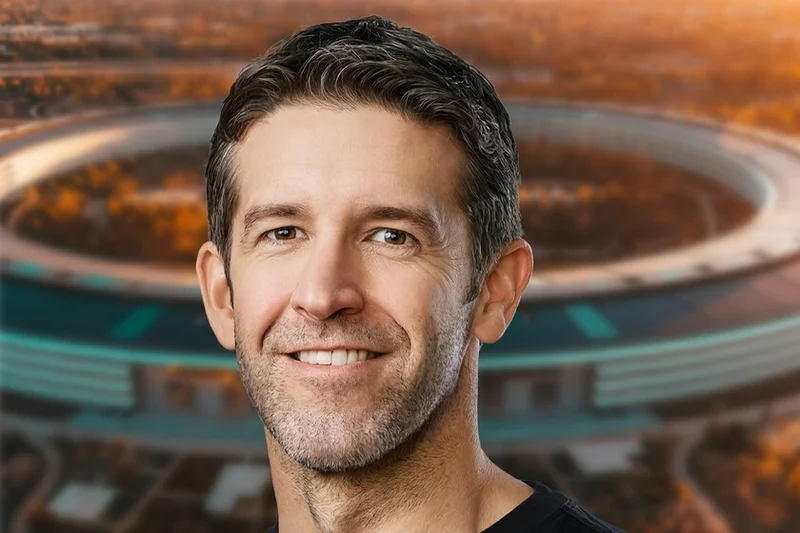
His profile fits the requirement with almost mathematical precision. He joined in 2001, giving him institutional memory that predates the iPhone. His entire career has been forged within Apple’s demanding hardware culture, overseeing the Mac, iPad, and AirPods. He is, by all accounts, deeply respected, technically proficient, and—like Cook—possesses a calm, operational demeanor. His age (50) is a critical data point, signaling to the board a potential tenure of a decade or more, ensuring the stability they crave. The retirement of Jeff Williams, once seen as the natural successor, clears the path entirely. The board isn't just picking a person; they are selecting a profile, and Ternus is a near-perfect match for the "continuity" model.
And this is the part of the analysis that I find genuinely telling. An informal poll shows public sentiment is still coalescing. When asked if they favor Ternus replacing Cook, 43.88% said yes, while 19.1% said no. The most significant number, however, is the 37.01% who are "Unsure." That’s a massive block of ambiguity. Does this uncertainty stem from a simple lack of name recognition, or does it reflect a deeper, unstated anxiety about what Apple becomes under another operational-focused leader? Is a steady hand at the tiller enough when the technological seas are being churned up by generative AI and new computing paradigms?
The selection of Ternus feels like a calculated bet that the Apple ecosystem—the massive, interconnected system of hardware, software, and services—is now the primary engine of innovation, not a single visionary leader. The thinking seems to be that the machine Jobs built and Cook scaled is now so powerful that it simply needs a master technician to keep it running at peak performance. Ternus’s job won't be to invent the next iPhone. His job will be to ensure the teams who might invent it have the resources, discipline, and operational excellence to do so. It's a significant, if subtle, shift in corporate philosophy. The company is betting on its process over any single person.
I've looked at hundreds of succession plans, and this one is unusually transparent in its objective. Apple is prioritizing risk mitigation above all else. They are choosing the candidate who is least likely to break the model that has generated unprecedented wealth. The growth was astronomical under Cook—to be more exact, the market cap grew by over 2.5 trillion dollars during his tenure. The board's primary responsibility is to protect that value. From that perspective, a well-liked, deeply experienced, internal hardware chief (who presents no risk of a culture-shocking external hire) is not just the logical choice; it's the only one that makes sense on a spreadsheet.
But does it make sense for the next decade of technology? The challenges Apple faces aren't just about iterating on the iPhone. They are about fundamental shifts in user interface and artificial intelligence. These are "zero to one" problems, not "one to 1.1" problems. The question that remains unanswered is whether an engineer, however brilliant, steeped in the success of the past two decades is the right person to navigate a future that might require invalidating some of that past success.
The Stability Premium
Ultimately, the elevation of John Ternus isn't a story about a person; it's a story about a strategy. Apple is paying a premium for stability, betting that operational excellence will continue to be its greatest competitive advantage. This is a risk-averse, board-approved decision to double down on the Tim Cook playbook: methodical execution, supply chain mastery, and incremental product perfection. They are choosing a known quantity over a potential visionary. It's a safe bet, perhaps the safest one they could make. The only question is whether "safe" is enough to win the next war.
Tags: john ternus