

The Space Race You're Not Watching Just Got Ugly
Let’s get one thing straight. The news that AST SpaceMobile gains Verizon ally amid SpaceX’s direct-to-device push isn't some feel-good story about connecting the world. Please. This is a story about fear. Raw, uncut, corner-office fear.
For months, the entire telecom industry has been watching SpaceX and T-Mobile’s direct-to-device satellite play like it’s a lit stick of dynamite, and Verizon just blinked. They saw their rival AT&T cozy up to AST, and after what I can only imagine was a series of panicked, coffee-fueled meetings in some soulless glass tower, they followed suit. The press release paints a rosy picture of a "strategic partnership," but let's call it what it is: a defensive alliance. An "anyone but Elon" coalition.
AST’s stock shot up over 8% on the news. Investors are relieved. But relieved about what? That AST landed a huge partner? No. They're relieved Verizon didn't defect to the enemy. An analyst, a guy named Louie DiPalma, even said SpaceX was "aggressive in pursuing Verizon." You don't say. That’s like saying a shark is "aggressive in pursuing a bleeding seal." It's what they do.
This whole deal feels less like a bold step into the future and more like two aging kings pooling their gold to hire a mercenary, hoping he can take down the dragon that's been burning down their villages. Are they betting on AST because they have the best tech, or because it’s the only non-SpaceX horse left in the race?
A War of Paper Tigers and Rocket Fuel
Here’s the part that really gets me. We’re supposed to treat this as a legitimate two-way fight, but look at the board.
On one side, you have AST SpaceMobile. They have five—count 'em, five—commercial satellites in orbit. They need 45 to 60 just to provide decent coverage in the US. They're shipping their next-gen "BlueBird" satellites, which are impressively huge, and they have plans to launch one every month or two through 2026. Plans. Projections. Promises. It’s a company running on PowerPoint slides and investor capital.
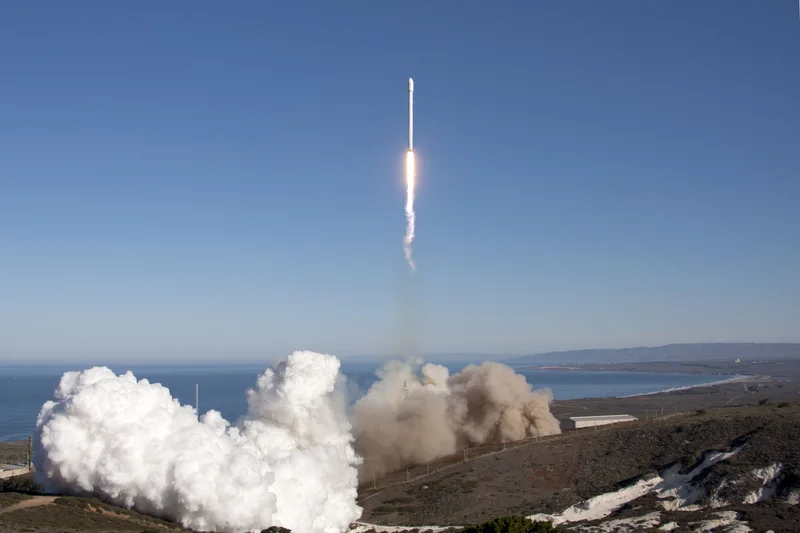
On the other side, you have SpaceX. While AST was prepping a single satellite for shipment, SpaceX casually lobbed another 28 Starlinks into orbit on a booster, B1071, that was on its 29th flight. Think about that. Their hardware has flown more missions than AST has satellites. It’s so routine it barely makes the news. They're an industrial machine, a conveyor belt to low Earth orbit. And they're not just talking about D2D service; they're already doing it with T-Mobile and have announced plans to dump over $17 billion into spectrum to make it exponentially better.
This is a bad matchup. No, 'bad' doesn't cover it—this is a five-alarm dumpster fire of a mismatch. It's like a garage inventor with a brilliant blueprint going up against a fully operational Ford factory. And now, Verizon and AT&T, the two companies that have spent decades nickel-and-diming us for every gigabyte, are playing venture capitalists, hoping their cash can somehow defy the laws of physics and manufacturing scale. Good luck with that.
This all reminds me of the early days of streaming, when every TV network tried to launch its own dinky little streaming service to compete with Netflix. It's the same playbook, just with more rocket fuel. And offcourse, we're the ones who will end up paying for a dozen different services that don't talk to each other.
Then again, maybe I'm the crazy one here. Maybe this is exactly what the industry needs—a well-funded challenger to keep the monolith in check. But I’ve been watching this game for a long time, and I know that hope ain't a business strategy.
Your Phone Bill Is the Battlefield
So what does this corporate dogfight mean for you, the person who just wants their phone to work in the middle of nowhere?
On the surface, it’s about choice. Soon, you might be able to get satellite-powered broadband on your Verizon or AT&T phone, thanks to AST’s giant space antennas. They’re promising speeds up to 120 Mbps, which sounds fantastic. But the most interesting, and telling, detail is that both carriers are contributing their own spectrum for AST to use. That's right, these bitter rivals are sharing their toys. When was the last time you saw that happen? It shows you just how existentially terrified they are of becoming dumb pipes for a SpaceX-run network.
They're promising a seamless experience, a world without dead zones. Which sounds great, until you realize your bill will probably... I don't even want to think about it. Are we headed for a future where your phone’s satellite connection only works if you’re with the “right” carrier? Will we have roaming charges for space?
The real war isn't about technology; it's about who owns the customer. Who sends the bill. SpaceX wants to own the network in the sky, and the telcos are fighting like hell to remain the gatekeepers on the ground. And we're all just caught in the middle, hoping the shrapnel doesn't hit our wallets too hard.
A High-Stakes Bet on 'Anyone But Elon'
Let's drop the pretense. This isn't about innovation or connecting the unconnected. This is a proxy war. Verizon and AT&T aren't choosing AST because it's the guaranteed winner; they're funding AST because it's the only player on the board they think they can control. They would rather bet on a long shot they can influence than cede the future to a company that sees them as obsolete infrastructure. This is their last stand, and they've just pushed all their chips onto one square.
Tags: spacex