

Oil Prices Fall to Lowest Point in 5 Months. That’s the headline. For weeks, the market narrative has been a chaotic mix of geopolitical risk premiums, U.S.-China trade whispers, and Federal Reserve tea-leaf reading. But as prices continue their slide, it’s becoming clear that the market is finally being forced to look at the cold, hard arithmetic of supply and demand. And the numbers are telling a story that no amount of speculative noise can drown out.
The recent price action feels less like a temporary dip and more like a structural repricing. A brief rebound on hopes of de-escalation in U.S.-China trade talks evaporated almost instantly. This isn't surprising. Hope is not a sustainable bullish catalyst when it’s pitted against a tidal wave of physical barrels. The market is slowly, painfully, accepting a new reality: we are swimming in oil, and the tide is still coming in.
What we are witnessing is a fundamental disconnect between the narratives traders tell themselves and the inventory reports they can't ignore. For months, the focus has been on potential disruptions. Now, the focus is shifting to the undeniable, on-the-ground reality of a global supply surplus. The question is no longer if a surplus will weigh on the market, but for how long.
The Anatomy of a Surplus
Let's dispense with the sentiment and look at the numbers. According to the International Energy Agency (IEA), the imbalance is stark. The agency has raised its global supply growth projections to a staggering three million barrels per day for this year. For 2026, it’s projecting another 2.4 million barrels per day. This isn't a trickle; it's a flood, driven by robust output from the Americas and production hikes from OPEC+.
Now, place that against the demand side of the ledger. The IEA has lowered its demand growth estimates to approximately 700,000 barrels per day for both this year and the next. The math here isn't complex. When supply growth outpaces demand growth by a factor of more than three-to-one, a significant surplus isn't a forecast; it's a certainty. The market is trying to fill a bathtub with a firehose while the drain is only the size of a drinking straw. The overflow was inevitable.
This isn't just an IEA projection, either. The U.S. Energy Information Administration (EIA) has added its own weight to the bearish case, forecasting that domestic oil output will reach 13.5 million barrels per day by 2026. This relentless efficiency from American producers acts as a constant ceiling on prices, neutralizing the impact of production cuts elsewhere. Every time a geopolitical flare-up sends prices soaring, a wave of U.S. shale is waiting to meet that demand, capping the rally. What happens when the geopolitical risk fades, but the supply remains? We’re finding that out right now.
The core of the issue is that two powerful, independent engines of production—OPEC+ and the Americas—are running at full tilt simultaneously. This wasn't the expected scenario. But here we are. So, while the talking heads on financial television debate the nuances of Jerome Powell's next speech, are they looking at the simple fact that we're producing millions more barrels of oil than we consume every single day?
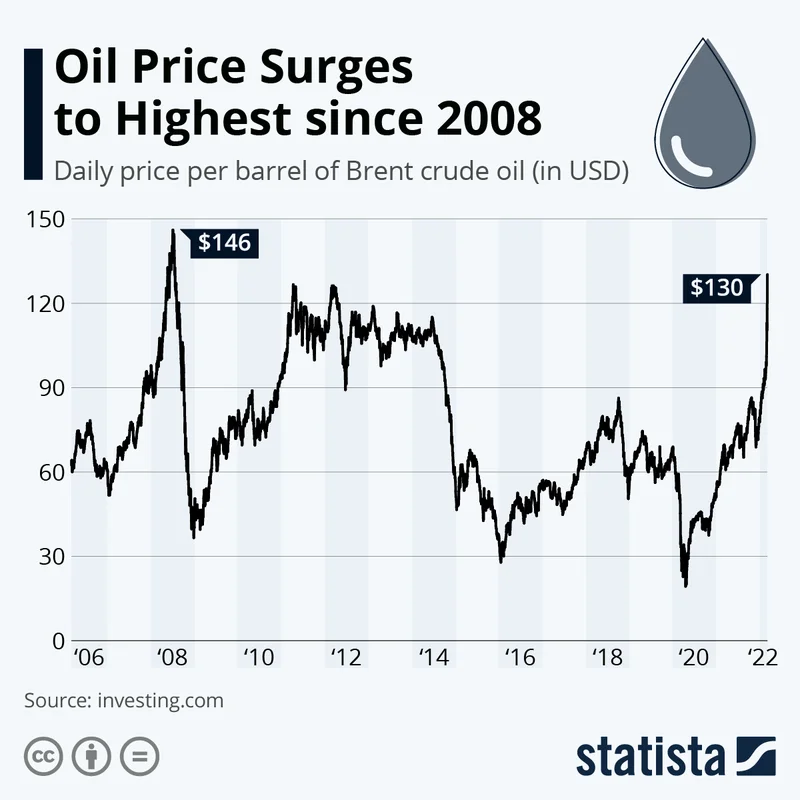
Fading Narratives and Fleeing Capital
For much of the year, the market has been propped up by a "geopolitical risk premium." This intangible buffer was added to the price to account for potential disruptions in the Middle East or escalations in global trade conflicts. But premiums, by their nature, are based on fear of the unknown. As glimmers of stability emerge in the Middle East and trade talks, however tentative, continue, that fear premium is evaporating.
The market is now being forced to value oil on its fundamentals, and it doesn't like what it sees. This isn't just my interpretation; you can see it in the flow of capital. The J.P. Morgan commodities research team recently noted that the estimated value of open interest in energy markets fell by a substantial $8.2 billion in a single week. The decline was led overwhelmingly by crude oil, where prices for WTI and Brent dropped by about 3%—to be more exact, 3.3% and 2.8%, respectively.
I've looked at capital flow reports for over a decade, and a weekly outflow of this magnitude isn't just a minor correction. It’s a capitulation. It signals that institutional money is no longer betting on geopolitical flare-ups or optimistic demand stories to rescue the price. Instead, it is voting with its feet, acknowledging the overwhelming weight of the supply data. The narrative is shifting from speculative, event-driven trading to a sober assessment of inventory levels.
This is the most crucial development. When the money leaves, the story changes. The brief price rallies become shorter and weaker, while the sell-offs become deeper and more prolonged. We're seeing a classic transition from a narrative-driven market to a data-driven one. The only question now is how low the data can push the price before a new, more potent bullish narrative emerges. But what could that possibly be?
The Gravity of the Numbers is Pulling Down
So, where does this leave us? The path of least resistance appears to be downward. The supply-demand imbalance isn't a forecast for next quarter; it's happening now and is projected to continue for at least the next 18-24 months. Barring a major, unforeseen event—a true black swan that physically removes millions of barrels from the market—it's difficult to construct a durably bullish case based on the current data set.
The J.P. Morgan analysts note that the enforcement of sanctions on Russia remains the "key bullish factor for oil markets." This is a valid point, but it's a political variable, not a geological or economic one. Relying on the unpredictable enforcement of sanctions to offset a multi-million-barrel daily surplus feels like a precarious bet.
For now, the arithmetic is winning. The simple, undeniable gravity of a global supply glut is pulling the market back to earth. The era of pricing oil based on fear and speculation is giving way to an era of pricing it based on what’s in the tank. And right now, the tanks are full.
Tags: oil prices