

I see the headlines every day, just like you do. "Mortgage Rates Hit Annual Low!" they scream, pointing to the latest data. As of this morning, the average 30-year fixed mortgage rate has nudged down to 6.18%. On the surface, it’s a tiny shift, a couple of basis points. A rounding error in the grand scheme of things.
But I don’t look at data like that. As a researcher, I was trained to see the patterns behind the numbers, the story hiding in the signal-to-noise ratio. And the story here isn’t about a fractional drop. It’s about a system stretched to its absolute limit. It’s about a pressure cooker reaching a critical point.
We’re all so focused on the question, “Is now a good time to buy a house?” that we’re completely missing the bigger, more profound question: Are we even thinking about “the house” in the right way? This 6.18% isn't a finish line; it's a starting pistol for a race we didn't even know we were running.
The Ghost in the Machine
Let's be brutally honest for a moment. This rate, this supposed "annual low," feels astronomically high because the entire foundation has shifted beneath our feet. The fact sheets are stark. Over the last decade, the average monthly mortgage payment in America has nearly doubled, jumping from around $712 to over $1,420. In some counties in Idaho, costs have skyrocketed by more than 180%. This isn’t a gentle market correction; it’s a tectonic shift that has priced millions of people out of a dream.
When I first read that "doubled in a decade" statistic (Mortgage payments have nearly doubled in the past decade. These counties saw the biggest rise), I honestly just sat back in my chair, speechless. It’s the kind of data point that feels less like economics and more like a social crisis in the making.
So, why are rates so sticky? Why aren’t the Fed rate cuts mortgage interest rates are supposed to follow giving us the relief we expect? The answer is that the system is more complex than a single lever. Mortgage rates are tethered to the 10-year Treasury yield—in simpler terms, they’re tied to the long-term confidence of investors in the economy. With concerns about inflation and the national debt, those long-term bond yields are staying stubbornly high, acting like a sea anchor on mortgage rates. The Fed can steer the little speedboat of short-term rates, but the massive cargo ship of the bond market moves on its own currents.
It’s a fascinating, intricate machine. But what if it’s the wrong machine for the 21st century? What if we’re trying to run revolutionary new software on a computer built in 1950? The friction we’re feeling, the affordability crisis, isn't a bug. It's a fundamental feature of an outdated system.
The Great Unlocking is Coming
Here’s where I get incredibly optimistic. History teaches us one thing with absolute clarity: sustained pressure forces radical innovation. Think of the space race. The immense political pressure to reach the moon didn't just get us to the moon; it gave us GPS, memory foam, and a revolution in computing. The pressure of the current housing market is creating the exact same conditions for a paradigm shift in how we live.
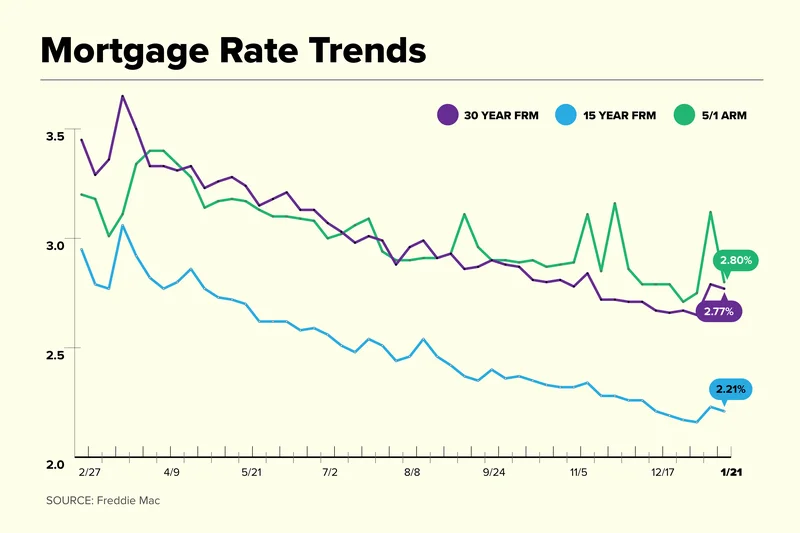
We’re already seeing the first tremors. A fascinating piece of data shows that with current mortgage interest rates making it painful to move, home improvement spending is set to rise. People who locked in those legendary sub-3% rates are staying put and adapting their spaces. This isn't just about new kitchen cabinets. It’s a psychological shift from viewing a house as a temporary financial asset to viewing it as a long-term, adaptable home.
This is the critical turning point. This is the moment where the dream pivots from "buying the perfect house" to "creating the perfect home." And that’s where the real magic is about to happen.
We are standing at the precipice of a revolution in housing technology—imagine communities of 3D-printed homes built with sustainable materials at a fraction of today's cost, modular construction that allows your home to grow with your family, and decentralized energy grids that make neighborhoods self-sufficient. This isn't science fiction; the technology is already here, waiting for the economic incentive to scale. The current affordability crisis is that incentive. It's the catalyst we needed to break free from the slow, expensive, and inefficient methods of the past.
Of course, with great technological leaps comes great responsibility. We have to ensure these new tools are used to create beautiful, equitable, and accessible communities for everyone, not just high-tech enclaves for the wealthy. The goal is to democratize good design and sustainable living.
So, will mortgage rates drop in the next five years? The forecasts say maybe a little, hovering in the low 6% range (Projected mortgage interest rates for the next 5 years). But frankly, who cares? Fixating on that is like trying to predict the future price of horse-drawn carriages in 1910. The real revolution was the automobile, and it was about to change everything.
The Number is Just the Starting Gun
Forget 6.18%. That number is the last gasp of an old world. It’s the sound of a system straining under its own weight, creating the exact conditions needed for its own disruption. The real rate to watch isn’t the interest rate; it’s the rate of innovation. The most important question isn't "what are current mortgage interest rates," but "what are we about to build?" Stop looking at the mortgage calculator and start looking at the horizon. The future of home isn't just going to be different. It’s going to be better than we can even imagine.
Tags: mortgage interest rates