

Let's get one thing straight. The market is a liar.
On Wednesday, IBM, the grand old battleship of the tech world, did everything it was supposed to do. It topped third-quarter estimates. It lifted its guidance for the future. By every metric taught in a stuffy MBA classroom, the arrow should have pointed up. The little number next to the ticker should have been green.
Instead, the stock dropped.
You could almost hear the collective sigh from the C-suite in Armonk. The perfectly coiffed executives, fresh off their earnings call, probably stared at their Bloomberg terminals in disbelief, the steam from their artisanal coffee fogging up the screen. They played the game, checked all the boxes, and Wall Street still gave them the middle finger. If beating expectations and promising even better results sends your stock tumbling—a situation summed up by reports like IBM tops third-quarter estimates and lifts guidance, but stock drops—what in the hell is the point of this entire charade?
The AI Cargo Cult
For years now, IBM has been on a desperate quest for relevance. Under CEO Arvind Krishna, the strategy seems to be "buy anything that has 'AI' or 'cloud' in the description." We're told this is a bold transformation. A pivot. A reinvention. Since 2020, they've snapped up around 55 companies. Fifty-five. The latest is Cognitus, a specialist in SAP software solutions.
The press release, offcourse, is full of synergy and forward-looking statements. Cognitus will "enhance" IBM's AI edge. It will "boost" their ability to help clients. It’s all very exciting, I'm sure. But let’s call it what it is: another bolt-on.
IBM's acquisition strategy is like watching a dad going through a mid-life crisis. He can't compete with the young, athletic guys anymore, so he just buys all the expensive gear. A carbon-fiber bike, the latest smart watch, compression sleeves, a Peloton he'll use twice. He has all the stuff of a modern athlete, but he’s still the same guy who gets winded walking up a flight of stairs. IBM has bought the AI accessories—the niche consulting firms, the hybrid cloud platforms—but it ain't Nvidia. It's not even in the same universe as Google or Microsoft when it comes to a cohesive, groundbreaking AI vision.
This Cognitus deal is a perfect example. It's a niche play for companies already trapped in the SAP ecosystem. It’s an incremental improvement for a subset of customers. This is a bad idea. No, 'bad' doesn't cover it—this is a fundamentally boring strategy dressed up in the sexiest buzzword of the decade. Are we really supposed to believe that buying a company that helps with regulatory compliance for SAP users is the spark that will let IBM reclaim its AI throne? Who are they trying to convince?
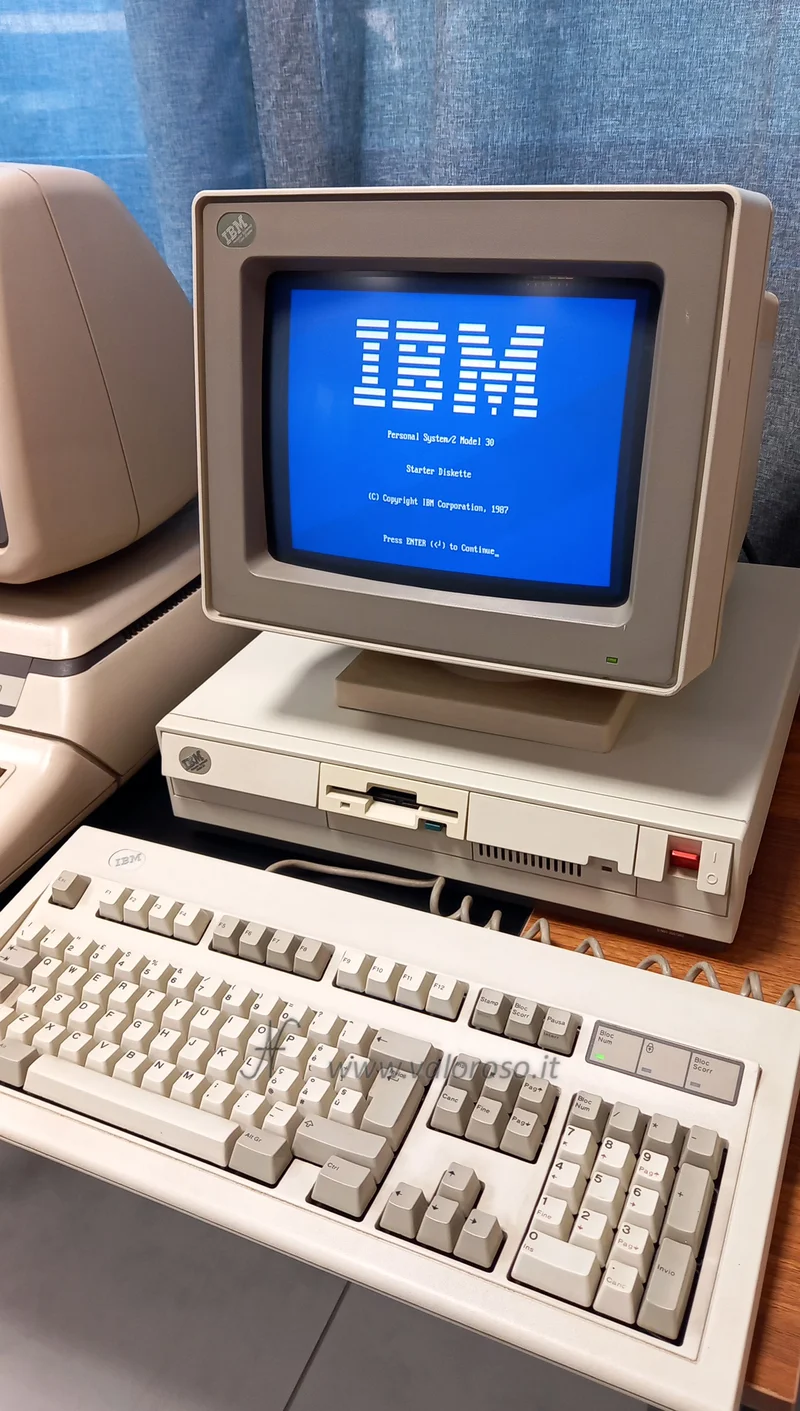
It feels like every legacy tech company is just playing pretend now. Slap an AI label on it, issue a press release, and hope the algorithms that control the IBM stock price pick up the keyword. It's a cargo cult, where they perform the rituals of innovation without any real understanding of what made the tech gods (like Nvidia stock) descend in the first place.
Your Grandfather's Tech Stock
While the company is busy LARPing as an AI startup, the financial media is telling you the real story, even if they don't realize it. I saw one article explaining, with painful sincerity, how you could earn a cool "$500 a month" from IBM's dividend. The math in the piece, How To Earn $500 A Month From IBM Stock Ahead Of Q3 Earnings - IBM (NYSE:IBM), was all there: you just need to scrape together a mere quarter of a million dollars—about $251,871 to be exact—and you too can get a monthly check that might cover your car payment.
This is the quiet part out loud. This is the company's true identity.
When the most compelling investment thesis for a supposed tech leader is its dividend yield, the growth story is dead. It's over. You don't see articles explaining how to make passive income from NVDA or Tesla stock dividends, because people buy those for the insane, world-changing potential. You buy them because you think they're building the future.
You buy IBM for the 2.38% yield. You buy it because it's safe, predictable, and won't give your broker a heart attack. It has become the tech equivalent of a utility company. It keeps the lights on for its massive enterprise clients, it pays its dividend, and the stock price just sort of... exists. It’s a financial instrument, not a revolution.
And that’s why the stock drops on good news. The market isn't trading on IBM's quarterly earnings beats. It’s trading on a much bigger, more existential question: Can this battleship actually learn to fly? Every press release about a niche acquisition, every partnership with a company like Groq, is just another desperate attempt to convince people they're bolting on wings. But the traders, the ones with real money on the line, look at the IBM stock price today and see a whole lot of steel and not a lot of lift.
Then again, maybe I'm the one who's crazy. Maybe a P/E ratio of 45 for a company that's essentially a dividend play makes perfect sense in a world gone mad. Maybe slowly accumulating niche software firms is the secret to winning the AI wars and I just can't see the 4D chess being played. But I doubt it. It just looks like a company that's run out of big ideas, and is now just... tidying up the garage.
It's a Dividend Play, Not a Tech Play
Let's stop pretending. IBM isn't a growth stock. It isn't an AI powerhouse locked in a battle with the giants of Silicon Valley. It's a stable, slow-moving behemoth whose primary function in a modern portfolio is to spit out a quarterly dividend. The AI talk is just marketing noise to keep the whole thing from sinking into complete irrelevance. They beat earnings and the stock went down because, in the grand scheme of things, nobody with a straight face believes this company is going to be the next big thing. It's just... there. And for a quarter-million dollars, it'll pay your bills. Thrilling, isn't it?
Tags: ibm stock