

For eight hours on a Thursday afternoon, Alaska Airlines simply ceased to exist.
Not in a physical sense, of course. Its jets, gleaming with their familiar Eskimo logo, sat inert on tarmacs from Seattle to Los Angeles. Its crews stood by, and its passengers milled around in the low, anxious hum of airport terminals. But in the operational sense that matters, the airline went dark. A "failure at our primary data center" at 3:30 p.m. triggered a nationwide ground stop that wasn't lifted until 11:30 p.m., vaporizing the travel plans of thousands and erasing more than 360 flights from the departure boards (Alaska Airlines IT outage canceled hundreds of flights, company says).
The company’s statements were a masterclass in corporate crisis communication. They apologized for the "inconvenience," offered a "flexible travel policy," and assured everyone that safety was "never compromised." All standard procedure. But buried beneath the polished mea culpas is a far more unsettling data point: this is the second time in a matter of months that Alaska’s digital backbone has snapped. A similar, though shorter, IT outage grounded the fleet for three hours in July.
Twice is not a coincidence. It’s a pattern. And that pattern points to a systemic fragility that should worry not just Alaska’s passengers, but its investors.
Anatomy of a Digital Collapse
Let’s be precise about what happened. The outage wasn't a slow degradation; it was a sudden, catastrophic failure. At 3:30 p.m., key operational systems went offline. By 4:20 p.m., the airline was forced to announce a full ground stop. For the next seven hours, the entire network was effectively paralyzed. Think of an airline's IT infrastructure as its central nervous system. It’s not just the website or the app; it’s the intricate web of systems that manages crew scheduling, flight dispatch, weight and balance calculations, and maintenance logs. When the primary data center fails, it’s not like a light bulb burning out. It’s a profound, system-wide stroke.
The official explanation—a "failure at our primary data center"—is a black box. It’s a statement of effect, not cause. Was it a hardware malfunction? A software bug pushed live without adequate testing? A power or cooling failure? The company has clarified it wasn't a cybersecurity incident, which only deepens the mystery around its internal vulnerabilities. The silence on the specific cause is, from an analytical perspective, more revealing than any press release. It suggests either they don't fully know what went wrong, or they know and prefer not to disclose the fragility of their core operations.
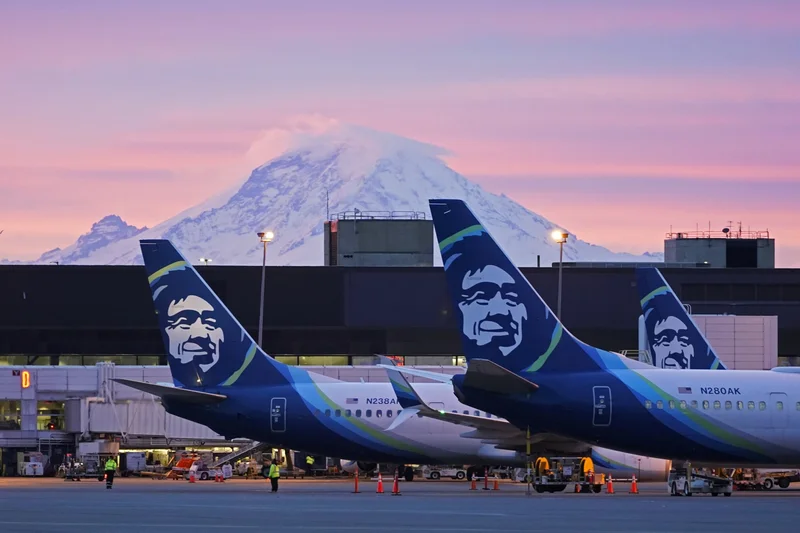
We have anecdotal data on the human impact. A traveler in Austin described the gates as "jammed," with crews unable to give any updates. You can almost picture the scene: the glare of departure screens showing nothing but "DELAYED," the frustrated sighs, the endless scrolling on phones as people search for information the airline itself can't provide. This isn't just an "inconvenience." It’s the chaotic, real-world consequence of a digital failure.
But the most critical question remains unanswered. In an era of redundant, cloud-based, fault-tolerant systems, how can a single data center failure bring an entire airline to its knees for eight hours? Where was the failover? A robust system should have been able to switch to a secondary data center in minutes, not hours. Was the backup system also compromised, or was it simply not up to the task?
The Unspoken Cost of Technical Debt
This brings us to the July outage. That incident, which lasted about three hours—or, to be more exact, just under three hours—was also blamed on a hardware failure at a data center. In its subsequent earnings report, Alaska disclosed that the event lowered its earnings per share by approximately 10 cents. That’s a tangible, quantifiable financial hit from a relatively brief system failure.
Now, consider the October event. It lasted more than twice as long, during a busy Thursday evening travel period, and resulted in a far greater number of cancellations (the final tally was over 360 for Alaska and its regional subsidiary, Horizon Air). The company has already postponed its scheduled earnings call, stating it doesn't yet have an estimate of the financial impact. I've looked at hundreds of these kinds of operational incident reports, and this one has all the hallmarks of a problem far deeper than a single faulty server rack. Blaming "hardware" twice in four months for two separate, system-wide paralyses feels like an incomplete narrative.
This is what technical debt looks like in the wild. It’s the accumulation of deferred maintenance and underinvestment in core infrastructure. Legacy systems are patched and updated for years, becoming increasingly complex and brittle, until one day, a seemingly minor issue causes a cascade failure. While Alaska has been focused on its high-profile acquisition of Hawaiian Airlines (a substantial and complex integration project), one has to wonder if its core, foundational technology has been neglected. Was the focus on expansion coming at the cost of stability?
The company is working to merge Hawaiian's operations into its system. While Hawaiian was unaffected by this outage, the sheer complexity of integrating two major airlines is a massive undertaking for any IT department. Is the team stretched thin? Are resources being diverted from maintaining the existing, fragile infrastructure to building the new, combined one? These aren't accusations; they are the necessary, skeptical questions that arise when a pattern of critical failure emerges. The cost of this outage won’t just be measured in refunded tickets and hotel vouchers (a standard, if costly, part of the playbook). It will be measured in the erosion of brand trust and the stark exposure of a critical operational vulnerability.
The Real Price of a Brittle System
Ultimately, the apologies and fee waivers are just noise. They are the predictable, reactive measures of a company in damage control. The real story here isn’t about a single bad day; it’s about the alarming recurrence of that bad day. An airline's most valuable asset, after its people, is its operational reliability. When that reliability is shown to be dependent on a system that can shatter twice in a single quarter, the underlying value of the entire enterprise comes into question. The cost of the October outage won't be 10 cents a share. It will be much, much higher. And the silence from the company on the root cause tells us they know it.