

Decoding the Gold Rush
Gold's recent surge past $4,000 per ounce is undeniably eye-catching. We're talking about a 53% jump this year alone, dwarfing the S&P 500's more modest 15% gain. The headlines scream "safe haven," and the narrative is familiar: economic uncertainty, political instability, and the siren song of inflation protection driving investors into the warm, shiny embrace of gold. But before you liquidate your 401k and start hoarding bullion, let's inject a dose of data-driven skepticism into this gold rush.
The mainstream explanation hinges on fear. Government shutdowns, potential tariff impacts, and a wobbly job market are supposedly sending investors scrambling for safety. Nigel Green, CEO of deVere Group, claims the situation in Washington has "reminded investors that political promises do not equate to financial security." Okay, but let's unpack that. Political instability has been a constant hum in the background for years. Is this shutdown really that different? And if so, how do we quantify that difference in terms of gold demand? The data feels... incomplete.
A more concrete factor is the Federal Reserve's interest rate cuts. Lower rates make gold more attractive because investors aren't missing out on higher yields from bonds. Bart Melek at TD Securities points this out, suggesting gold is now a "better safe-haven than Treasuries." This argument holds water, but only to a point. We're talking about potential rate cuts, not a done deal. Are investors really pricing in future easing with such fervor? It feels premature.
Global central bank buying is another piece of the puzzle. The narrative goes that countries are diversifying away from the dollar, spurred by geopolitical tensions like the war in Ukraine. Giovanni Staunovo at UBS Global Wealth Management highlights the "trigger point" when Western allies froze Russian foreign holdings. This certainly adds to the picture. Emerging market central banks have increased their gold holdings by 161% since 2006, according to the IMF. But is this a cause, or a correlation? Are they buying gold because they distrust the dollar, or because gold is simply performing well? It's tough to disentangle the motives.
China's Golden Gambit: A Taxing Situation?
Now, let's zoom in on a recent development that throws a wrench into the narrative: China's change to its gold tax policy. For two decades, retailers could offset a 13% value-added tax (VAT) when selling gold. Now, that offset is being slashed to 6% for some retailers—specifically, jewelry retailers and sellers outside official exchanges.
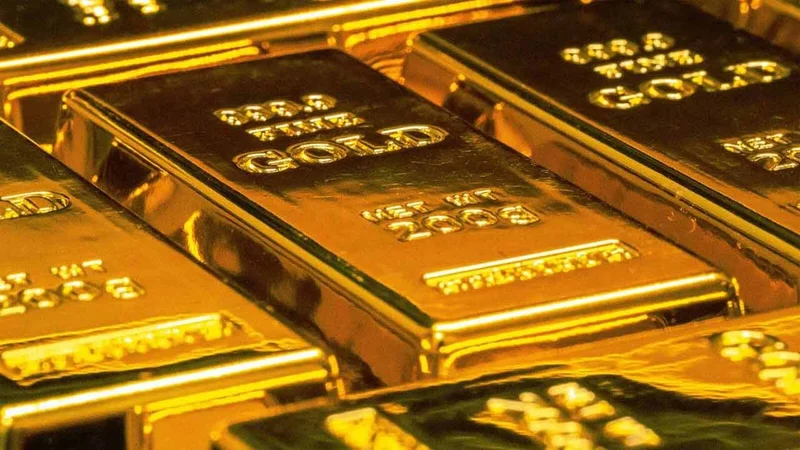
The immediate reaction? Chinese jewelry stocks tanked. Chow Tai Fook plunged as much as 11.4%. The logic is simple: higher taxes mean higher prices, which means lower demand. Analyst Rhona O'Connell at StoneX argues this "erodes the concept of high purity jewellery as an investment," because consumers will be 6.5% worse off when they try to sell. Gold price today, Monday, November 3: Gold opens at $4,001 after China changes gold tax rebate
Here's where things get interesting. Despite the initial price dip, gold prices rebounded quickly. How do we reconcile this? Was the market overreacting? Or is something else at play?
ICBC Standard suggests this move "supports Beijing’s broader aim of strengthening Yuan-based gold trading through closer integration between Shanghai and Hong Kong." In other words, the tax change might be less about squeezing consumers and more about consolidating control over the gold market. This could be a calculated move to shift gold trading towards official exchanges, boosting the Yuan's influence.
I've looked at hundreds of these market reactions, and this feels like a classic case of short-term pain for long-term gain—if Beijing's strategy works. The risk, of course, is that it backfires, dampening overall gold demand and hurting Chinese jewelers in the process.
The key question, which none of these reports answer, is this: What is the actual volume of gold affected by this tax change? If most gold trading already happens on exchanges, the impact might be minimal. But if a significant chunk of retail sales is affected, we could see a more sustained price correction. The data is frustratingly opaque.
A Fool's Gold?
So, is gold's $4,000 milestone a legitimate reflection of economic fundamentals, or a bull trap waiting to snap shut on overeager investors? The truth, as always, is somewhere in the messy middle. There are valid reasons for gold's rise—lower interest rates, geopolitical tensions, and central bank buying. But the China tax policy change introduces a wild card, and the lack of transparency around its potential impact is concerning. Until we get a clearer picture of the numbers, I'm treating this gold rush with extreme caution. The price of gold has increased 45.7% in one year, or to be more exact since November 2024.
Don't Bet the Farm Just Yet
Tags: price of gold today