

The prevailing narrative around Generation Z is a study in contradiction. One day, they are the "anxious generation," emotionally overwhelmed and struggling under the weight of a world they didn't create. The next, they are a revolutionary force, toppling governments from Madagascar to Nepal with little more than a TikTok account and a shared sense of injustice. These two portraits—the fragile and the defiant—are often presented as a "split" within the cohort, a clean break between two opposing mindsets.
But what if they aren't opposing forces at all? What if they are correlated outputs from the same root equation?
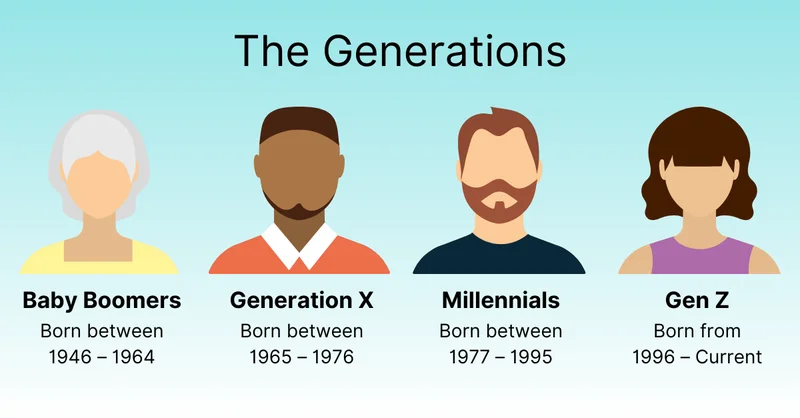
I've spent my career analyzing data to find the signal in the noise, and the data on Gen Z (typically defined as those born between 1997 and 2012) doesn't suggest a fracture. It points to a generation responding with cold, logical clarity to the systems they've inherited. The despair and the defiance are not a paradox; they are two sides of the same coin, minted from a profound and data-driven skepticism. One is the tragic consequence of that skepticism turning inward, the other is the explosive result of it being channeled outward.
The Unmistakable Signal of Distress
Before we get to the protests, we have to look at the numbers that don't lie. A recent analysis of federal death statistics, Suicide claims more Gen Z lives than previous generation • Stateline, paints a grim, unvarnished picture. For Gen Z adults, suicide is claiming more lives than it did for millennials at the same age a decade ago. It’s a quiet crisis that lacks the visceral imagery of a street protest but is captured with chilling precision in CDC death certificates.
The increase is not uniform. The data shows a staggering 85% of the growth in suicides is concentrated among young Black and Hispanic men. States like Georgia have seen rates jump 65%, with North Carolina and Texas not far behind at 41%. For young Hispanics, suicide has surpassed homicide as the second-leading cause of death. For young Asians, it is now number one. These aren't just statistics; they are markers of systemic failure.
The theories for this trend range from the economic—a generation for whom upward mobility feels like a statistical improbability—to the social, where the constant, algorithm-driven pressures of online life have replaced the messier, more forgiving interactions of the real world. As one researcher noted, this is the first generation to experience "overprotection in the real world and underprotection in the virtual world."
I've looked at hundreds of these kinds of demographic reports, and this particular trendline is unusual for its steepness and specificity. It’s not a gentle curve; it’s a sharp, upward spike that began around the time of the Great Recession and simply never abated for this age group. While older cohorts saw their rates of despair eventually fall, for young adults, the crisis became a new baseline. We see this in the story of Julian “Wolf” Rivera, a 27-year-old who felt the combined pressure of an unfulfilling job, family responsibilities, and a mental healthcare system that had no room for him when he finally reached out. His story is a single data point, but it represents a pattern of systemic friction and a lack of institutional support.
And just as this crisis has peaked, the institutional response appears to be weakening. The fact sheet notes that federal funding for mental health programs and crisis teams has been cut by millions (the New York cut was $88 million in April), and specialized resources like the LGBTQ+-specific suicide helpline have been shuttered. The system is failing, and the data is screaming it.
The Equal and Opposite Reaction
At the exact same time these devastating numbers are being recorded, another, more visible story is unfolding. In Kenya, Madagascar, Morocco, and Togo, it is Gen Z leading massive, disruptive anti-government protests. These aren't your parents' protests, organized by established political parties with formal leadership. They are organic, decentralized, and coordinated with startling efficiency on platforms like TikTok, Facebook, and Discord—a messaging app popular with gamers.
In Madagascar, protesters used a cartoon skull from the Japanese anime "One Piece" as their symbol to fight a repressive government. It's the same symbol used by Gen Z protesters who toppled Nepal's government a month prior. This isn't coincidence; it’s a data point on the speed of cultural and tactical transmission in a globally connected generation. They saw what worked in Nepal and adapted it.
What are they protesting? The fundamentals. A lack of clean water and electricity in Madagascar. An unpopular finance bill in Kenya. Government spending on World Cup stadiums instead of healthcare and education in Morocco. These aren't abstract ideological battles; they are pragmatic demands from a generation that sees a clear discrepancy between the lives they are being offered and the lives they see politicians and their children living online. As analyst Mohamed Keita notes in From Madagascar to Morocco: Gen Z protests shake Africa, they "don't fall for government propaganda" because they have access to unfiltered information.
This is the defiant side of the generational coin. It is the same data-driven skepticism, but aimed outward. They see a system that is corrupt, inefficient, and failing to perform its basic functions. So, they are taking to the streets to demand a complete overhaul. They are not asking for a seat at the table; they are demanding a new table entirely.
This brings us to the anecdotal evidence from the classroom. A business lecturer, Jeff LeBlanc, has been running the same "Leadership Trait Auction" for nearly a decade. The traits students value most—kindness, communication, expertise—haven't changed. What has changed is the interrogation of those traits. Students now ask if kindness is "performative" or if strong communication still matters when AI can write your emails. This is the crucial insight. They aren't rejecting the values; they are stress-testing them against the reality they've witnessed. They've watched adults and institutions fail to live up to those very values, and they are determined not to be fooled again.
The Inevitable Output of a Broken System
So, what's the real story? It's not a "split." It's a spectrum of response to the same core realization: the systems built by previous generations are no longer fit for purpose. The data is clear. Whether it manifests as a tragic rise in suicide or a powerful surge in street protests, the underlying driver is the same. It is a generation that has looked at the numbers—on economic mobility, on government corruption, on mental health funding—and drawn a perfectly rational conclusion.
The only variable is the vector. When that cold, hard analysis is met with isolation and a broken support system, it can turn inward, leading to despair. When it's shared and amplified through a digital network, it turns outward, leading to defiance. Viewing Gen Z as either fragile or fierce misses the point entirely. They are simply calculating, and these are their calculated responses.
Tags: gen z years