

So, the Navy's Supergun Is a Paperweight. Surprise, Surprise.
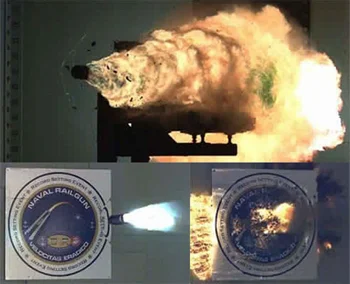
Remember the U.S. Navy's electromagnetic railgun? Of course you do. For years, it was the Pentagon's shiniest new toy. The PowerPoint presentations were glorious. We were promised a weapon that fired a projectile—a solid chunk of metal, no explosives—at Mach 7, hitting targets over 100 miles away with the force of a truck smashing into a wall at 160 mph. It was supposed to be the future of warfare, a game-changer that would make missiles look like quaint, expensive relics.
Except it wasn't. After burning through who knows how many billions of taxpayer dollars, the program just… vanished. Poof. Gone. The official story is that it was "paused" due to budget headwinds and some minor technical hurdles.
Let me translate that for you. "Minor technical hurdles" means the barrel, the very core of the weapon, cracked and warped into uselessness after fewer than 30 shots. Thirty. That’s not a weapon system; that’s a disposable science fair project. Imagine a commander in the heat of battle: "Jenkins, fire at that incoming missile!" "Can't, sir! That was shot number 29. The barrel looks like a melted pretzel."
This is a bad look. No, 'bad' doesn't cover it—this is a five-alarm dumpster fire of technological hubris. They needed so much power to fire the damn thing, 20 to 30 megajoules a pop, that only the super-expensive, perpetually-troubled Zumwalt-class destroyers could even dream of feeding the beast. It’s like designing a revolutionary new toaster that can only be plugged into a nuclear reactor. What’s the point?
So what really happened here? Did anyone with a basic understanding of physics and material science ever think this was going to work in a sustained, real-world combat scenario? Or were they just so caught up in the sci-fi fantasy that they kept throwing money at it, hoping a miracle would solve the whole "laws of thermodynamics" problem?
The Consolation Prize and the Competent Ones
Naturally, the Pentagon can't just admit they blew a fortune on a dead end. That's not how the game is played. Instead, we get the pivot. The PR spin. "The railgun program wasn't a failure," they say, "it was a success that produced the Hypervelocity Projectile (HVP)!"
Give me a break.
Yes, the HVP is a cool piece of tech. It's the slug the railgun was meant to fire, and now the Navy and Army are Frankensteining it into their old-school 5-inch guns and Howitzers. Firing a super-fast, non-explosive round from existing cannons is a neat trick, I guess. It gives them more range and a different kind of punch. But let's be real: this is like spending ten years and a billion dollars trying to build a flying car, only to have it fail spectacularly, and then pointing to the fancy new tires and saying, "See! The project was a huge success! Look at this incredible tire technology we developed!"
It’s a consolation prize. A face-saving measure to justify the colossal expense and the years of hype. They’re putting a high-tech engine in a horse-drawn buggy and calling it innovation. Meanwhile, while America was busy writing its own "we meant to do that" narrative, Japan was just… building a railgun that actually works.
You read that right. In April 2025, the Japan Maritime Self-Defense Force released pictures of a railgun mounted on their test ship, the JS Asuka. By September, they announced their success, confirming that a Japanese Warship Fires Railgun At Target Vessel For The First Time. And here's the kicker, the detail that should make every U.S. defense contractor sweat: their research goal was a barrel life of 120 rounds. They confirmed that after 120 shots, no significant damage occurred.
Let that sink in. The U.S. couldn't get past 30. Japan is hitting 120 and is now working on the next phase: continuous firing, fire control systems, and miniaturizing the power source. They’re turning the science fiction into a functional weapon system. They’re building the reliable Toyota while we were trying to build a drag racer that explodes after one run. They're even collaborating with French and German engineers to push the technology forward. It’s almost like they took a methodical, realistic engineering approach instead of just chasing headlines and CGI demo videos. Who woulda thought.
This whole saga ain't just about one weapon. It's about a mindset. The U.S. military-industrial complex seems obsessed with chasing the next impossible "leap-ahead" technology, burning through cash and talent on projects that are 90% hype and 10% feasibility. We get so focused on the dream that we forget about the gritty, boring, offcourse necessary work of making something that actually functions in the real world. And while we’re busy patting ourselves on the back for our fancy new "tires," other countries are quietly driving the car we failed to build right off the lot. It's embarrassing, and honestly...
We Invented the Future and Then Forgot How to Build It
So here we are. The pioneers of the railgun concept are now using its leftover ammunition in century-old cannon designs, while the nation we once lectured on military matters is putting a working version of our failed dream out to sea. It’s the perfect, bitter metaphor for 21st-century American innovation: a brilliant flash of genius, followed by a complete inability to see it through, all while someone else takes our idea and does it better, cheaper, and more reliably. We’re becoming the world's R&D department, providing the blueprints for our own obsolescence. And we’re paying a premium for the privilege. What a deal.
Tags: Railgun