

The headline is a ghost in the machine, a whisper of anxiety that flickers across a thousand trading screens before the sun even rises over London. As of this morning, September 26th, European shares are a mixed bag, a nervous twitch before the release of U.S. inflation data. The old guard watches the VIX, the so-called "fear gauge," and sees a storm on the horizon. They hear the familiar drums of volatility—the echoes of 2008, of the pandemic’s flash crash, of trade wars and geopolitical tremors.
The narrative writes itself, doesn't it? Uncertainty brews, the wise elders counsel caution, and fear becomes the currency of the day. A recent Fidelity study seems to pour fuel on that fire, with a headline-grabbing statistic: nearly half of all self-directed investors believe the market will perform worse over the next 12 months.
Case closed, right? Batten down the hatches.
But if you stop there, you miss the revolution. You miss the single most fascinating story unfolding in the world of finance today. Because buried in that same study is a paradox so profound, it redefines everything we think we know about markets, risk, and human intuition. While nearly half predict a storm for the market as a whole, a staggering 64% believe their own portfolios will perform the same or better.
What is this? Simple arrogance? A classic case of cognitive dissonance?
I don’t think so. When I first dug into these numbers, I honestly just sat back in my chair, speechless. It's not just a trend; it's a fundamental rewiring of financial intuition. We are witnessing a great divergence, a split between two entirely different species of investor, operating in two different realities.
On one side, you have the Tenured. These are the veterans, the investors with ten or more years of scar tissue. They remember the dot-com bust and the housing crisis. For them, history is a brutal teacher. It’s no surprise that 35% of them report a lower risk tolerance than just a year ago. They prioritize limiting losses. They see a market dip and their muscle memory screams "sell."
And on the other side? We have the New Guard. The investors with five or fewer years in the game. They aren't just younger; they are natives of a new digital continent. They see a market dip and nearly half of them call it what it is: a buying opportunity. They are five times more likely than the veterans to be exploring advanced tools like options and margin trading for the first time. They’re not just investing in stocks; they’re actively seeking to advance their knowledge, to understand the machinery behind the curtain.
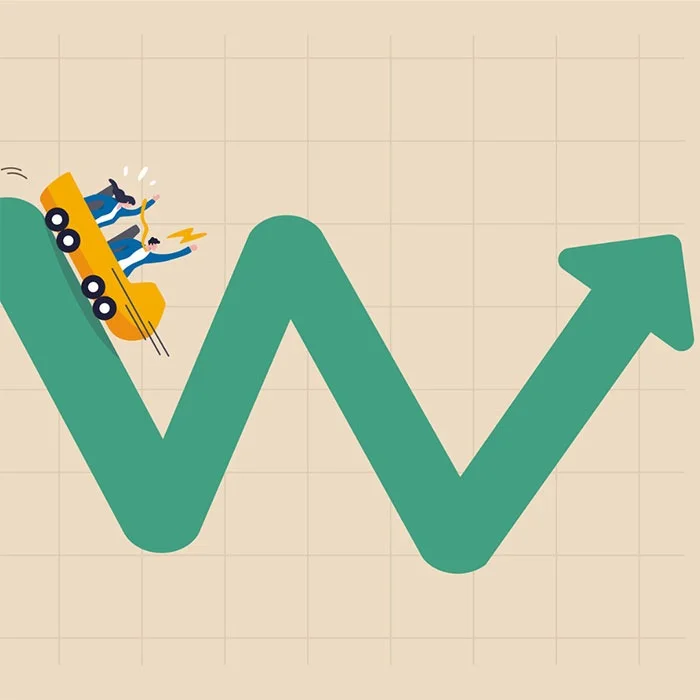
The easy, cynical take is to call this youthful naivete. To dismiss it as the recklessness of a generation that hasn't been properly burned yet. But that’s a lazy analysis. It misses the paradigm shift. The real difference between these two groups isn't age or experience—it’s the source code of their decision-making.
When the Network Becomes the Brain
The Rise of the Distributed Brain
The Tenured investor operates on a traditional, centralized model of information. They read the Wall Street Journal, they analyze historical performance, they listen to seasoned analysts. It’s a top-down flow of carefully curated data.
The New Guard operates on a completely different architecture. More than a third of them make most of their investing decisions based on social media. They are fluent in a language the old guard barely understands—the language of crypto, of which 72% of them are familiar, compared to just 35% of veterans. They are plugged into a decentralized, real-time, collective consciousness. This isn't just about getting hot tips from Reddit. This is the financial equivalent of the shift from the printing press to the internet. The printing press allowed for the broadcast of a single, authoritative text to many, just as traditional financial media broadcasts the wisdom of a few analysts. The internet, however, created a network where everyone is a node, a publisher, and a critic—a distributed brain processing a torrent of information simultaneously.
This is the kind of breakthrough that reminds me why I got into this field in the first place. We're seeing the birth of a financial hive mind, a system that processes fear, sentiment, and data in a radically new way. It’s a system that can absorb the shock of a volatile oil price or a regulatory change and see not just risk, but arbitrage and opportunity, and the speed of this is just staggering—it means the gap between a market event and the collective response is closing faster than we can even comprehend.
This new ecosystem is even changing the behavior of the machines. Look at the data on Algorithmic Trading—in simpler terms, it's about using complex computer programs to make trades at speeds no human ever could. In developed markets, these algorithms have traditionally focused on small-cap stocks. But in newer, evolving markets like China, the research shows AT is more active in the big, Main Board stocks. The machines are going where the hive mind is most active. They are learning from this new, distributed intelligence.
Now, does this new world carry risks? Of course. A decentralized network can become an echo chamber. A single piece of viral misinformation can cause a flash crash. The power of tools like margin trading demands a new level of responsibility and education. We must build the guardrails, the educational frameworks, to ensure this new power is wielded wisely.
But to see only the risk is to be willfully blind to the astonishing potential. We're not just watching a generational shift in investing strategy. We are watching the beta test of a new model for collective problem-solving. A model that is more resilient, more agile, and fundamentally more optimistic than the one it is replacing. It looks at the same grim headlines, the same shaky European open, the same impending inflation data, and it doesn't just see fear. It sees a puzzle to be solved.
What happens when we apply this model to other complex challenges? To climate change? To medical research? To energy grids? What happens when a generation raised on decentralized trust and collective intelligence turns its focus from the S&P 500 to the world's biggest problems?
The Future is Distributed
This isn't a story about naive kids gambling on meme stocks. It is the story of a fundamental upgrade to our collective intelligence. The old model, based on centralized authority and historical precedent, is brittle. It panics. The new model, based on a distributed network of millions of minds constantly learning and adapting, is antifragile. It evolves. The old guard is preparing for the last war; the new guard is building the operating system for the next century.
Reference article source:
- European Shares Poised For Mixed Open; US Inflation Data Eyed
- Research on the impact of algorithmic trading on market volatility
- New Data From Fidelity Investments® Reveals Confidence Among Self-Directed Investors Despite Tumultuous Trading Year