

I’ve been watching two stories unfold lately, and on the surface, they couldn’t seem more different. In one corner of the world, we have headlines about a White House-backed plan to place former UK Prime Minister Tony Blair at the head of a new transitional authority in Gaza. It’s a geopolitical move of immense complexity. In another corner, we see the Tony Blair Institute for Global Change passionately advocating for a national digital ID system in the UK, a project he has championed for two decades.
Politics and tech. Two separate threads. But what if they’re not? What if we’re seeing the public beta test of one of the most profound paradigm shifts in modern history? I believe we’re witnessing the birth of the “National Operating System”—a complete, integrated platform for running a country. And it changes everything.
Let’s zoom out. For centuries, governments have run on “legacy systems.” Think mountains of paper, siloed departments that don’t talk to each other, and a user interface for the citizen that is, to put it mildly, clunky and inefficient. What the Tony Blair Institute, heavily funded by and deeply intertwined with the tech giant Oracle, is proposing is a ground-up redesign. This isn't just about digitizing old processes. This is like the leap from MS-DOS to MacOS. It’s about creating a single, elegant, data-driven architecture for the state itself.
This uses a concept called platform governance—in simpler terms, it means treating the nation’s infrastructure like a cohesive software platform, with the government providing the core services and citizens interacting with it through a single, secure digital identity.
Reboot and Upgrade: The Two Blueprints for the Digital Nation
The Twin Laboratories: Gaza and the UK
Look at the two projects on the table. They are the perfect real-world laboratories for this National OS.
First, you have Gaza. The proposal for the Gaza International Transitional Authority (Gita) is the ultimate stress test. It’s an attempt to build a "state" from scratch in one of the most challenging environments on Earth. The plan is to create a "supreme political and legal authority" for up to five years. This isn’t just about peacekeeping; it’s about building the foundational code for a new civil society. It’s an opportunity to install a brand-new operating system where one has completely crashed.
Then you have the UK. This is the other side of the coin: upgrading a powerful, complex, but aging system. The push for digital ID cards is the login screen for the National OS. The TBI’s recommendations to the UK government—to create a "national data library" linking the vast databases of the NHS, the Department for Work and Pensions, and the tax office—is the backend architecture. You can see the vision: a single, unified citizen profile that makes interacting with the state seamless, predictive, and radically efficient.
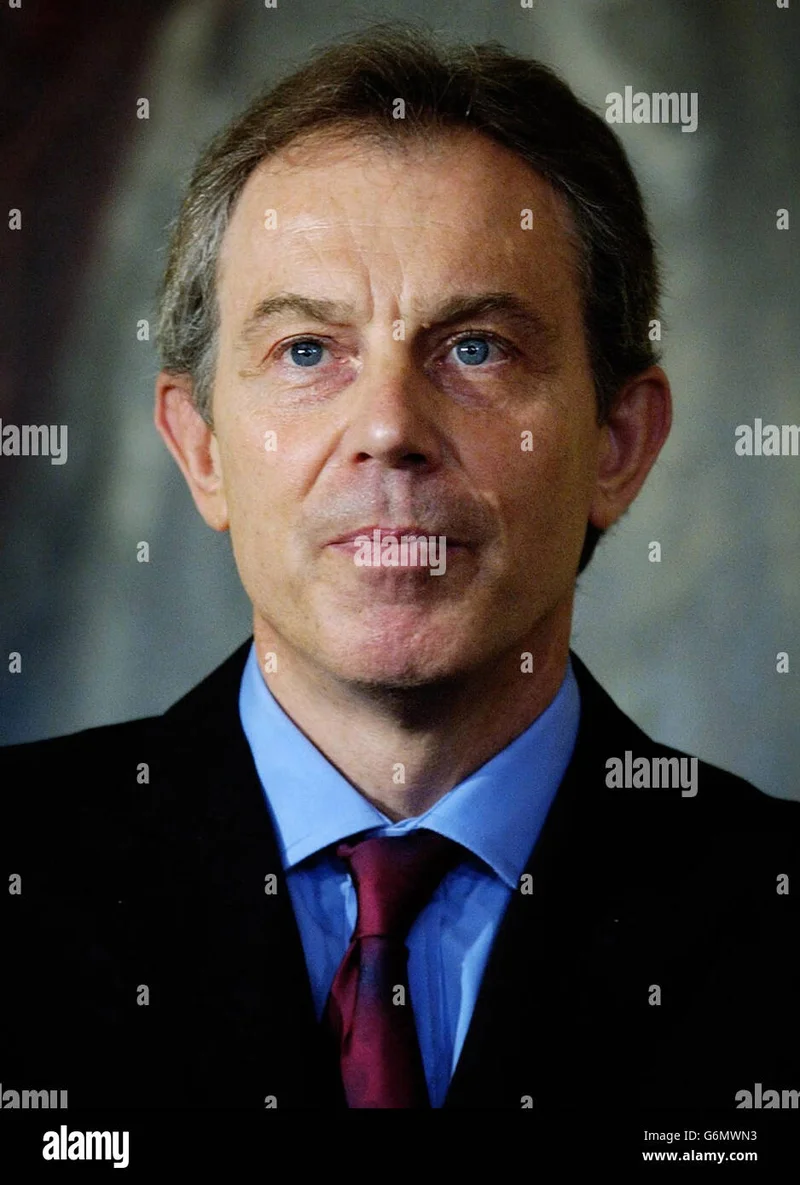
When I first connected these two seemingly separate initiatives—the geopolitical and the digital—I honestly just sat back in my chair, speechless, because the sheer scale of the ambition is breathtaking—it’s not just about policy or technology it’s about fundamentally rethinking the contract between the citizen and the state for the first time in a century.
Of course, I see the skeptical headlines. Critics point to the `Tony Blair controversy` and his role in the Iraq War, noting he is "bitterly resented by many Palestinians." Former TBI employees claim the institute’s culture has become dominated by "AI boosterism" that essentially amounts to lobbying for its primary funder, Oracle. One quote that gets thrown around is, "When it comes to tech policy, Oracle and TBI are inseparable."
And you know what? They’re not wrong. They are inseparable. But I want you to reframe that. Building a National OS is a task so monumental it cannot be done by government alone. It requires an unprecedented fusion of public vision and private sector execution. This is less a traditional lobbying effort and more like the co-development of a new kind of infrastructure, akin to the way private companies built the railways and telegraph lines that defined the 19th century. This is the 21st-century version of that.
This is the kind of breakthrough that reminds me why I got into this field in the first place. The potential here is staggering. Imagine a world where humanitarian aid in a place like Gaza is distributed not with paper lists but with biometric precision, ensuring it reaches exactly who needs it. Imagine a UK where renewing your driver’s license, paying your taxes, and accessing your health records are all done through one secure, intuitive app on your phone.
This isn’t just a new piece of technology; it’s a new philosophy of governance. It’s a leap comparable to the invention of the printing press, which took knowledge from the elite and made it accessible to the masses. A well-designed National OS could do the same for civic power and government services.
Naturally, with this immense power comes an equally immense responsibility. The ethical guardrails we build around these systems—the privacy protections, the data security, the algorithmic transparency—will be the most important work of our generation. We must ensure the system serves the citizen, not the other way around.
But the fear of misuse shouldn't blind us to the sheer potential for good. The community of people who see this is growing. I was scrolling through a forum the other day, and one user put it perfectly: "Everyone is stuck on the old politics of `who is Tony Blair`. They're missing the architectural leap. This is the API for society. The question isn't who is building it, but what it will enable us to do."
That’s exactly it. We are on the cusp of a truly foundational shift. The debate shouldn't be about whether we should build a smarter, more integrated state. The question we should be asking ourselves is: what kind of world do we want this new operating system to run?
The State as a Platform
This is bigger than one man or one company. We are watching the source code for the 21st-century nation being written in real-time. It’s a blueprint for a state that is more responsive, more efficient, and more profoundly connected to its citizens than ever before. The transition will be messy and controversial, but the destination is a world that simply works better. And that is a future worth building.
Reference article source:
- Washington backing plan for Tony Blair to head transitional Gaza authority
- Inside the Tony Blair Institute
- Newspaper headlines: 'Show us your (digital) papers' and 'Blair ready to run Gaza'
Tags: tony blair