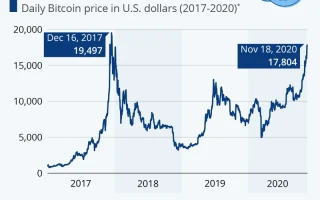
I’ve been watching the markets this week, and I see what you see. Bitcoin pulls back from its all-time high. XRP, Solana, and others take a 5% dip (Bitcoin (BTC) Price News: Dips Below $122K as XRP, Solana, ADA Plunge 5%). The headlines are filled with talk of an "overheated" rally and the usual chorus of short-term jitters. It’s easy to get lost in this noise, to see the daily red and green candles as the entire story.
But I’m telling you, that’s like focusing on the tremors and ignoring the tectonic plates shifting beneath your feet.
What we’re witnessing isn’t a sign of weakness. It’s the deep, collective breath a system takes right before a monumental leap forward. While day traders are sweating over a 5% dip, a much bigger, more profound story is unfolding just beneath the surface. A story about the final bridge being built between the old world of finance and the new digital frontier. And that bridge, my friends, is looking more and more like an XRP ETF.
The Institutional Floodgate
For years, we’ve talked about “institutional adoption” as some far-off, abstract concept. It was the holy grail that was always just over the horizon. But now, we’re standing at the gates, and the key is about to turn. An Exchange-Traded Fund, or ETF, isn’t just another acronym in a sea of crypto jargon. Think of it as a superhighway, elegantly paved and brilliantly lit, connecting the trillions of dollars locked away in traditional finance—pension funds, 401(k)s, the kind of capital that moves markets—directly into the heart of a digital asset like XRP.
This isn't just about new money. It’s about legitimacy. It's a formal invitation to the main stage.
When I first read Canary Capital CEO Steve McClur’s revised forecast—projecting up to $10 billion in inflows within the first month of an XRP ETF launch—I honestly had to sit back and just process the scale of it. He doubled his initial estimate, and for good reason. The recent legal clarity for Ripple, combined with its relentless expansion into global banking networks, has set the stage for something explosive. This isn't just hype; it's the convergence of technology, regulation, and real-world utility finally clicking into place.
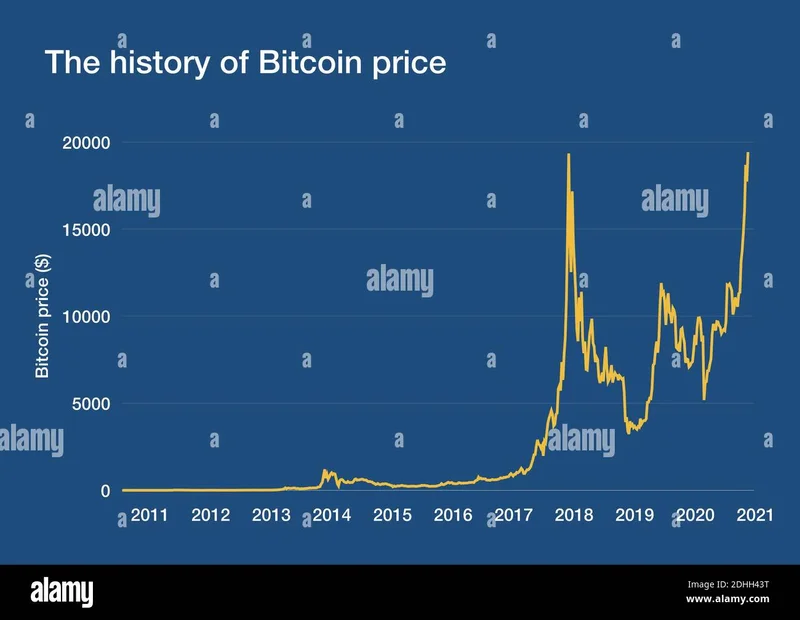
What does $10 billion in new capital actually do? This is where it gets truly fascinating. Market analyst Dom pointed out a wild phenomenon from a previous event: just $61 million in inflows managed to expand XRP’s market cap by a staggering $16.6 billion. That’s a multiplier of 272 times. It’s a financial feedback loop—in simpler terms, it means every new dollar of institutional investment doesn't just add a dollar to the value, it sends a massive signal of confidence that inspires more investment, creating a ripple effect that dramatically magnifies the asset's total perceived worth.
Even using a much more conservative multiplier, that projected $10 billion inflow could translate into a $544 billion boost to XRP’s market cap (XRP Price Prediction if XRP ETF Hits $10 billion in Inflows). With the current token supply, you’re suddenly looking at a price of around $12 per XRP. And that’s just the beginning.
From a Spark to an Inferno
Now, let’s talk about the number that’s causing a stir: $50. Veteran investor Pumpius, who’s been in this space since 2013, laid out a vision where XRP could potentially hit $30 to $50. To be clear, for XRP to reach $50, its market capitalization would need to approach $3 trillion, a figure that would place it above Bitcoin’s current valuation. It’s an audacious goal, and it’s right to be skeptical of such massive projections.
But this isn’t a prediction based on pure speculation. It’s built on a foundation of tangible progress. We’re talking about Ripple’s partnerships with giants like BNY Mellon and Santander, its acquisition of prime brokerage Hidden Road, and its growing role as a liquidity hub for cross-border payments—this is the kind of stuff that shows XRP is already being woven into the fabric of global finance, and the speed of this integration is just staggering, it means the gap between the financial system of today and the one we’re building for tomorrow is closing faster than we can even comprehend.
This is the historical analogy I keep coming back to: the advent of the railroad bond in the 19th century. Before then, investing in infrastructure was a messy, localized affair. But the creation of a standardized, regulated financial instrument allowed capital from all over the nation to flood in and build the very tracks that would define the American economy for the next century. The XRP ETF feels like that. It’s not just a product; it’s the vehicle that could fund the rails of a new global financial system.
Of course, with this kind of potential comes immense responsibility. A shift of this magnitude isn't just about numbers on a screen; it's about building a more equitable and efficient system. But what does a world with a $3 trillion XRP market cap even look like? Does it mean we’ve finally solved the multi-trillion-dollar problem of trapped liquidity in international payments? Are we on the cusp of an era where value can move as freely and instantly as information? These are the questions we should be asking.
We're Not Just Predicting the Future, We're Building Its Plumbing
Let's step back from the charts for a moment. The dips, the rallies, the breathless predictions—they are all symptoms of a much deeper truth. The very language of money is being rewritten. An XRP ETF, if and when it arrives, isn't the final chapter. It's the moment the world's largest financial institutions become fluent in this new language. It’s the ultimate validation that a digital asset, born from code and community, can stand shoulder-to-shoulder with the titans of traditional finance. This isn't about getting rich quick. It's about being part of a fundamental upgrade to the world's economic operating system. And that’s a story worth paying attention to.
Tags: bitcoin price today