It’s a familiar scene, replayed daily in the sterile, fluorescent-lit corridors of a thousand airports. The departure board, a mosaic of destinations and dreams, flickers. A single line of text changes from "ON TIME" to "CANCELED" in cold, digital lettering. A collective sigh ripples through the crowd at the gate. The gate agent’s voice comes over the intercom, a practiced monotone delivering apologies and citing "operational issues" or "inclement weather" hundreds of miles away.
This isn't just a moment of personal frustration. It's a data point. And when you aggregate these data points, a disturbing pattern emerges. The perpetual search query, "american airlines cancels flights today," isn't a spike driven by a single winter storm; it has become the low, persistent hum of a system operating on the very edge of its capacity. The official explanations are a form of narrative misdirection. They point to the symptom—the storm, the sick crew, the air traffic congestion—while deliberately obscuring the root cause. The real story, as is so often the case, isn't in the press release. It's buried in the operational data the airlines would rather you not see.
The problem is that we, the public, are trying to diagnose a complex system while being denied access to the schematics. We are told about a flight cancellation in Phoenix because of thunderstorms in Dallas, and we are expected to accept it as a simple, linear event. But it’s not. It’s a cascade failure. And I've spent enough years analyzing complex logistical networks to recognize one when I see it.
The Brittle Machine
For decades, the airline industry has been on a relentless quest for efficiency. They’ve optimized everything: seating density, fuel consumption, crew scheduling, and turnaround times. From a purely financial perspective, it’s been a remarkable success. They’ve squeezed every last drop of potential revenue out of their assets. But in doing so, they have systematically eliminated the one thing essential for any complex network to function reliably: slack.
The modern airline network is not a robust web; it's a finely tuned, brittle machine. It’s a power grid engineered to run at 99.9% of its maximum load, with no backup generators. When a single substation (a major hub like DFW or Charlotte) goes offline for a few hours due to weather, the entire grid doesn't just experience a brownout; it begins to suffer from cascading blackouts. A plane that was supposed to fly from Dallas to Omaha is stuck. That means the crew scheduled to fly that same plane from Omaha to Chicago is now out of position. The knock-on effects propagate through the system for days, long after the skies over Texas are clear.
This is the part of the analysis that I find genuinely puzzling from a risk-management perspective. Any first-year analyst knows that over-optimization in a dynamic system inevitably leads to fragility. Yet, the industry has treated this fundamental principle as an inconvenience to be ignored in the pursuit of quarterly earnings. They present each meltdown as an unforeseeable "act of God" rather than what it actually is: the predictable result of a system with zero margin for error. How many "once-in-a-generation" operational meltdowns must occur in a single decade before we admit the model itself is flawed? What is the actual, calculated cost of this brittleness, and at what point does it outweigh the savings from running so lean?
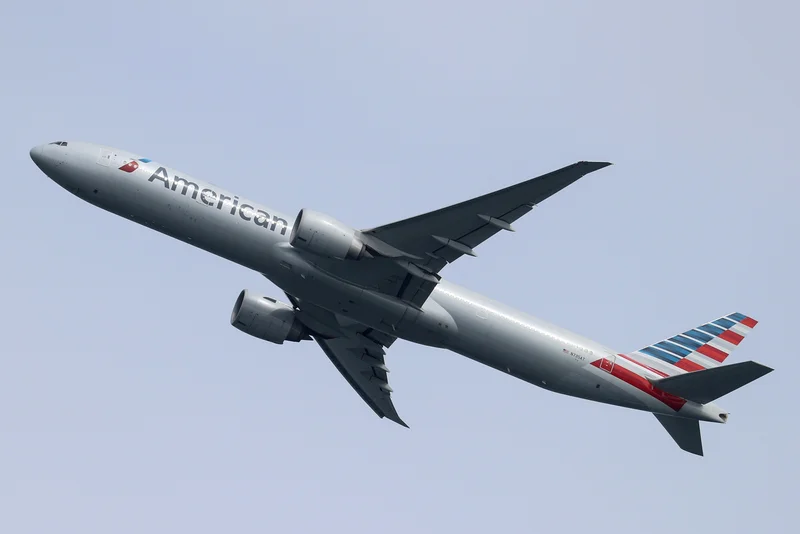
The airlines will tell you their completion factor is high—often north of 98%. But this single, aggregated metric is profoundly misleading. It’s like judging a hospital’s performance solely by its patient survival rate, without mentioning that a third of the patients had their surgeries delayed by a week. A 2% cancellation rate across a system that operates hundreds of thousands of flights a month translates to millions of disrupted passengers. Last year, that number was over 180,000 canceled flights—to be more exact, 183,471 for all U.S. carriers, a significant increase over pre-pandemic norms. This isn't a rounding error. It's a systemic feature.
The Data We Aren't Allowed to See
The core of the issue is informational asymmetry. We have the passenger-facing data: the cancellation notice, the frustratingly vague reason. The airlines have the operational-level data: the real-time dashboards showing crew legality (the hours a pilot or flight attendant can legally work), aircraft maintenance schedules, and passenger load factors. They possess the raw, granular truth of their own fragility, and they guard it carefully.
What we get instead are heavily sanitized, lagging indicators filed with the Department of Transportation. These reports are useful for historical analysis but are practically useless for understanding the real-time health of the system. They don’t tell us the critical metrics that would actually reveal the stress points. For instance, what is an airline's average crew reserve ratio on a given Tuesday? (This is the number of pilots and flight attendants on standby, the system's primary shock absorber.) What is the mean time to recovery for a hub airport after a ground stop? How many flights are proactively canceled hours or days in advance versus at the last minute?
This lack of transparency allows for a carefully crafted narrative. An airline can cancel 50 regional jet flights a day before a storm hits, blame the weather, and protect its mainline "on-time performance" statistics (a number that is itself easily manipulated by padding scheduled block times). They aren't technically lying, but they are presenting a curated version of the truth designed to obscure the full picture of their operational weakness. The constant stream of online searches for "american airlines cancels flights today" acts as a real-time, anecdotal counter-narrative. It's the qualitative data—the voice of the crowd—signaling that the official numbers don't reflect the experienced reality.
The ultimate question is one of incentives. Is there any real financial or regulatory pressure to build more resilience into the system? A canceled flight represents a direct cost in lost revenue and passenger re-accommodation, but what is the cost of a thousand small delays? What is the brand damage from a constant state of unreliability? Without transparent, standardized data on operational health, it’s impossible for consumers—or regulators—to accurately price that risk. We are left guessing, armed only with the memory of our last travel nightmare.
A System Running on Zero Margin
Let's be clear. The wave of flight cancellations we are experiencing isn't an anomaly or a bug. It is a predictable, mathematically inevitable feature of a system that has been stripped of all redundancy in the name of shareholder value. The model prioritizes capital efficiency over operational resilience, and passengers are the ones left to absorb the external costs of that decision. The vague excuses and lack of transparent data are not an oversight; they are a strategic necessity to prevent the public and regulators from understanding just how thin the margins of error truly are. The system isn't broken. It's performing exactly as it was designed to.