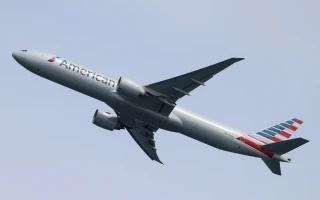
The recent news that American Airlines Cancels Flights on Key Route Between Dallas and Eugene—or, more precisely, has permanently scrubbed its route between Dallas/Fort Worth (DFW) and Eugene, Oregon (EUG)—should surprise no one who has been paying attention. The official statements, filled with boilerplate about "difficult decisions" and "continuous evaluation," are a predictable smokescreen. This wasn't a difficult decision. It was an inevitable one, dictated by the cold, impartial logic of a spreadsheet.
For four years, the DFW-EUG route existed as a small artery in American's colossal network. Launched with the optimism of 2021, it promised a direct link between the Pacific Northwest and the carrier's primary fortress hub. But data doesn't care about promises. The first sign of trouble, visible to any analyst months ago, was the downgrade from year-round to seasonal service. In the airline industry, this is the equivalent of a credit watch. It’s a public signal that a route's vital signs are weakening.
The final flight operated on August 5th—to be more exact, August 5, 2025—and with that, the experiment was over. The route now joins a graveyard of other pairings that failed to meet an undisclosed profitability threshold. I've looked at hundreds of these corporate announcements, and the pattern is always the same. The airline expresses regret for the "inconvenience" while methodically reallocating its assets (the planes, the gate slots, the crews) to more lucrative lines of business.
This isn't malice; it's portfolio management. An airline's route network is not a public utility, it's a collection of assets that must generate a return. The DFW-EUG flight was an underperforming stock, and American Airlines simply liquidated the position. The question we should be asking isn't why they cut it, but what was the specific load factor or revenue-per-seat-mile that triggered the execution? And how many other regional routes are currently hovering just above that fatal red line?
The Data Behind the Disappearance
To understand this cancellation, you have to look beyond a single flight path and examine the carrier's strategic position. American Airlines serves an enormous volume of passengers (over 200 million annually), yet it has historically struggled with profitability relative to its primary competitors, Delta and United. This creates immense internal pressure to optimize every single component of its operation. There is simply no room for sentimentality or for servicing routes that are marginal performers.
The post-pandemic travel landscape has only sharpened this focus. Demand is robust, but it's also concentrated. Leisure travelers are flocking to major hubs and vacation destinations, while traffic to smaller business centers and university towns like Eugene has not seen the same consistent, year-round rebound. A flight to Orlando in March is a safe bet; a flight to Eugene in October is a variable. Airlines are, by nature, allergic to variables they can’t profitably price.

This is where the corporate narrative and the passenger reality diverge. For American, removing the DFW-EUG flight is a minor adjustment, a statistical rounding error in a system of thousands of daily departures. It’s a logical move to improve efficiency. But for the traveler in Eugene, the system just became significantly less efficient. Their direct access to the South and Midwest is gone. What remains is a connection through Phoenix, which adds time and another potential point of failure—a tight connection, a weather delay—into their journey.
Imagine the departure board at DFW's Terminal C. For four years, "Eugene" had its place among dozens of other destinations. Now, it's just a blank space on the screen, its former slot likely occupied by a second daily flight to Nashville or Austin. The physical gate is still there, of course, but the digital thread connecting it to that specific Oregon city has been severed. That is the tangible result of a decision made in a boardroom hundreds of miles away, based on data points a passenger will never see.
A Warning for Every Other Mid-Sized City
The real story here isn't about Eugene. It's about every other city of a similar size that relies on one or two daily flights from a legacy carrier to connect it to the national grid. The cancellation of DFW-EUG is a case study and a warning. It demonstrates that network connectivity is not a given; it is a service that is constantly being evaluated for its financial viability.
When an airline like American trims a route, it creates a ripple effect. It reduces competition, which can lead to higher fares on the remaining options. It makes the entire network more brittle, as there are fewer planes and crews in position to absorb disruptions from weather or mechanical issues. A single canceled flight from a hub can no longer be as easily rerouted through a secondary city if that secondary city's link has already been cut.
Travelers are told to be flexible, to book refundable fares, to have backup plans. This is sound advice, but it also shifts the burden of a fragile system onto the consumer. The core issue is that the goals of the airline and the goals of the regional traveler are fundamentally misaligned. The airline seeks maximum profitability through network-wide optimization. The traveler seeks reliable, convenient access from their specific Point A to their desired Point B.
As long as this discrepancy exists, we will continue to see these kinds of cuts. Today it's Eugene. Tomorrow, it could be any number of other cities whose passenger demand profile is deemed insufficiently robust. What other routes, recently downgraded to "seasonal," are next? And what does it mean for the economic health of these smaller communities when their links to the rest of the country become longer, more expensive, and less reliable?
The Inevitable Logic of the Spreadsheet
Ultimately, this decision wasn't about people or places. It was about numbers on a balance sheet. The DFW-EUG route failed to justify its existence in the unforgiving calculus of modern aviation. For the analysts at American Airlines, erasing it from the schedule was as simple as deleting a row in a database—a clean, logical act of optimization. For the passengers who relied on it, the deletion is far more tangible. It represents lost time, higher costs, and a world that just got a little bit smaller. This is the friction-free efficiency of the market at work, and it's a process that has no room for nostalgia.