

Delta’s Q3 earnings report landed on October 9th, and the market’s reaction was immediate and unambiguous. The stock jumped over 5% in pre-market trading. The headline figures were, on the surface, pristine. Operating revenue hit $16.7 billion against a $15.7 billion expectation. Adjusted earnings per share came in at $1.71, comfortably beating the consensus of $1.52.
This is the kind of clean beat that analysts and algorithms are programmed to love. The company subsequently firmed up its full-year guidance, projecting an EPS of $6. That's a strong signal of confidence, especially after the uncertainty earlier in the year that led them to withdraw guidance entirely. The narrative is simple: Delta’s profit forecast tops estimates, buoyed by higher fares and resilient luxury demand.
But a clean narrative is often an incomplete one. When you look past the top-line numbers and into the operational data, a more nuanced, and I would argue more interesting, picture emerges. The market is cheering for revenue, but a key efficiency metric is quietly flashing yellow.
The Anatomy of a High-Margin Beat
The source of Delta’s outperformance isn't a mystery. The company was explicit about it. The growth was overwhelmingly fueled by high-profit segments. Premium revenue saw a 9% year-over-year increase, while corporate sales climbed 8%. This isn’t a story about a broad surge in travel; it’s a story about a very specific, and very lucrative, slice of the market. Delta has successfully positioned itself as the carrier of choice for business travelers and higher-income leisure customers who are, for now, insulated from broader economic pressures.
This strategy is working. The company is extracting more revenue per passenger, which is the holy grail for any airline. It’s a testament to their brand positioning and fleet management. They are selling more expensive seats, and people are buying them. The company’s guidance for Q4 revenue growth of 2% to 4% suggests they believe this trend has legs, at least through the holiday season.
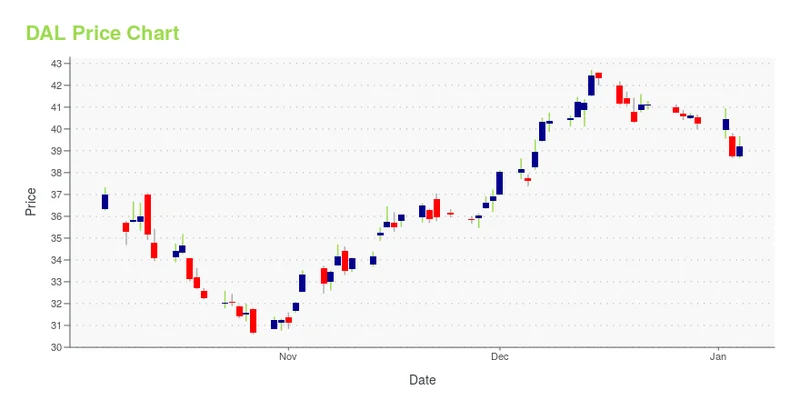
But here’s the data point that seems to have been lost in the shuffle: the Passenger Load Factor (PLF) fell. It was a small drop, just 1%, bringing the Q3 figure down to 86%. For the first nine months of the year, it sits at 84%. PLF is a simple, brutal metric. It measures the percentage of available seats that were actually filled with paying passengers. It is a direct indicator of operational efficiency. And it went down.
This creates a fascinating divergence. Revenue per passenger is up, but the efficiency of filling each plane is slightly down. What does that tell us? It suggests Delta is flying planes that are, on average, a little emptier than last year, but the passengers who are on board are paying significantly more. This isn't a volume play; it's a margin play. And this is the part of the report that I find genuinely puzzling: the market's complete dismissal of the PLF dip. I've looked at hundreds of these filings, and a divergence between strong revenue growth and a weakening core efficiency metric is usually a yellow flag, not a cause for a 5% stock surge.
A Strategy Built on an Economic Ledge
Think of Delta's strategy like a high-end restaurant that decides to remove a few tables to create a more exclusive, spacious atmosphere. The average check size per table skyrockets. The restaurant's total revenue might even go up. But it is now fundamentally more dependent on a smaller number of wealthy patrons and less resilient to a downturn that might cause those patrons to stay home. Delta is taking a calculated risk. It’s betting that the demand from its premium and corporate flyers (a segment that has proven remarkably durable) will not just continue, but will be strong enough to offset the slight drag from flying less-than-full planes.
So far, that bet is paying off handsomely. The full-year EPS guidance was firmed up to $6, which is inside the previous range of $5.25 to $6.25—to be more exact, it's at the higher end of that band, which is what's driving the current optimism. Analysts at firms like JP Morgan and Evercore ISI have set aggressive price targets ($85 and $75, respectively) based on this very thesis of resilient high-end demand.
The question isn't whether Delta executed its plan well in Q3. The data clearly shows it did. The real question is about the durability of that plan. How sensitive is that 9% growth in premium revenue to a shift in corporate travel budgets or a dip in the stock market that makes affluent families reconsider a first-class vacation? The company is effectively tying its fortunes to the spending habits of the top 20% of consumers. That’s a powerful engine in good times. But it’s also a significant concentration of risk. The market is celebrating the engine's current performance, but it seems to be ignoring the fragility of the road ahead.
The Metrics Tell Two Tales
Tags: dal stock