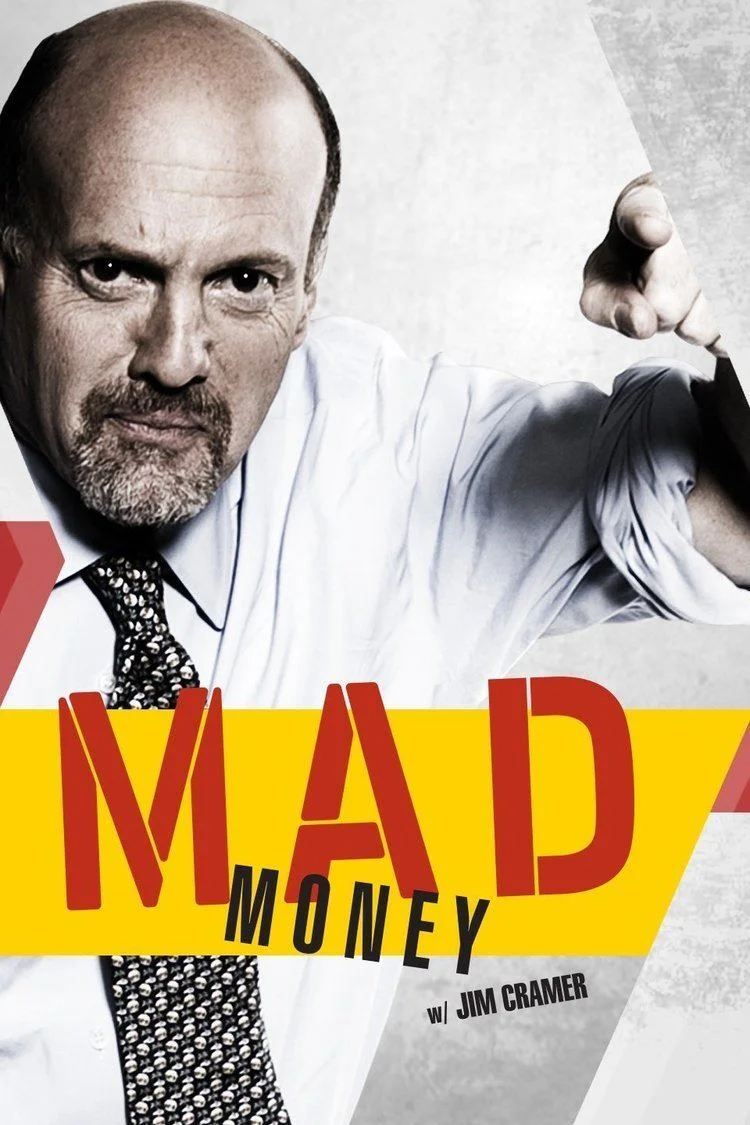
Let's be real for a second. Every night, a man with rolled-up shirtsleeves gets on national television, yells into a camera, and smashes sound-effect buttons like a toddler who just discovered the remote. And millions of people watch this, thinking they're getting a secret key to Wall Street. This is Mad Money with Jim Cramer, and I’m still trying to figure out if it’s a finance show or a piece of performance art about American desperation.
The man himself, Jim Cramer, is a Harvard-educated ex-hedge fund manager who used to make more than $10 million a year. He’s an insider’s insider. Now, he plays the role of the people’s champion on the Mad Money set, a manic financial preacher saving us from the wolves he used to run with. It's a great story. A redemption arc. But is it true?
Remember when Jon Stewart absolutely dismantled him on The Daily Show years ago? He exposed the whole thing for what it is: a game. A game where the house—Wall Street—always wins, and shows like Mad Money just make the players feel like they have a chance. Cramer’s defense was basically that it’s all just entertainment. And honestly, that might be the most truthful thing he’s ever said.
The Corporate Whisperer
So, who shows up to play this game? Corporate CEOs, that's who. I watched CSX CEO Joe Hinrichs on the Mad Money show recently (CSX CEO Joe Hinrichs Optimistic about Growth on "Mad Money"), and it was a masterclass in saying absolutely nothing. He talked about "creating value for shareholders" and "driving profitable growth." It’s the kind of corporate word salad you could generate with an AI. No, 'word salad' doesn't cover it—this is a five-alarm dumpster fire of PR-speak.
What does "creating value for shareholders" even mean when you're running a goddamn railroad, a piece of critical national infrastructure? Does it mean running skeleton crews on two-mile-long trains? Does it mean lobbying to kill safety regulations? The details are, offcourse, never discussed. Instead, Cramer lobs softballs and Hinrichs talks about "collaboration over consolidation" and how employee engagement is high. Give me a break.
Hinrichs ended his segment with a classic hype-man line: “Wait until you see what we do over the next couple of years!” It’s pure, uncut hopium, delivered straight to the veins of the retail investor. It's the same energy as a guy in a trench coat selling you a watch that "fell off a truck." The promise is always just around the corner, and all you have to do is buy in. But what are we really buying? A piece of a railroad company, or a ticket to a show where the host is the main attraction?
The Carnival Barker of Capitalism
The whole spectacle is like a financial carnival. Jim Cramer isn't an analyst; he's the carnival barker. He’s the guy screaming, "Step right up! See the stock that will defy gravity! Watch as this boring old railroad becomes a rocket to the moon!" He uses goofy props and sound effects to make the most mundane aspects of capital markets feel like a high-stakes Vegas game. It’s exciting. It’s addictive. And it's designed to separate you from your money.
People aren't tuning into Mad Money CNBC for sober, long-term financial planning. They're looking for a lottery ticket. They want that one hot tip, that "Boo-yah!" stock pick that will change their lives. Cramer provides that thrill. He turns investing from a slow, boring process of wealth accumulation into a fast-paced, emotional rollercoaster. And on a rollercoaster, someone always throws up.
It’s weird, because I spend half my time writing about how broken everything is, and the other half watching people desperately try to game the broken system. Then again, maybe I'm the crazy one here. Maybe this is just what late-stage capitalism looks like: a screaming man on TV telling you which stocks to bet on while CEOs whisper sweet nothings in his ear. It’s all just part of the ride, I guess, and we're all just strapped in, waiting for the next drop...
It's All Just a Show, Folks
Look, at the end of the day, Jim Cramer isn't selling financial advice. He's selling certainty in an uncertain world. He’s selling a feeling—the feeling that you're in on the secret, that you've got an edge. But the only edge being sold is the one on the knife that guts the retail investor every time the market turns. The show isn't called Sane Money. It's called Mad Money. The name is a warning, not a brand.
Tags: mad money