

The Ghost in the Machine: Why a Canceled Solar Farm Is the Best News for the Future of Energy
Imagine standing in the vast, quiet emptiness of the Nevada desert. The sky is a piercing, impossible blue, and the horizon stretches out so far it feels like you can see the curvature of the Earth. Now, picture filling that space—an area nearly the size of Las Vegas—with a shimmering, geometric sea of solar panels, silently drinking in the sun and converting it into enough clean energy to power nearly two million homes.
This wasn't a science fiction dream. This was the Esmeralda 7 project, a breathtakingly ambitious plan to build one of the largest solar power stations in human history. And last week, with the quiet click of a mouse updating a government website, the Trump administration killed it. The Bureau of Land Management simply changed the project’s status to “cancelled,” a move that led to headlines like Feds appear to cancel Vegas-sized solar project planned in rural Nevada.
When I first read the news, I honestly just sat back in my chair, speechless. It felt like watching NASA scrub a moon launch moments before ignition. A punch to the gut for anyone who believes in a future powered by ingenuity instead of ancient carbon. But after the initial shock wore off, a different feeling took its place: a profound sense of optimism.
Because the story here isn’t that a project was stopped. The real story is that we are now dreaming and engineering on a scale so massive that our political systems can barely comprehend it. The cancellation of Esmeralda 7 doesn’t signal the death of renewable energy; it signals that its ambitions have finally gotten big enough to be terrifying.
A Cathedral of Glass and Silicon
Let’s be clear about what Esmeralda 7 was. This wasn't just another solar farm. This was a statement. A 6.2-gigawatt behemoth planned by a consortium of energy giants like NextEra and Invenergy. To put that in perspective, that’s more than double the power output of the Hoover Dam, one of the great engineering marvels of the 20th century. This project was a 21st-century cathedral being built not to a god in the sky, but to the star at the center of our solar system—it was a monument to the idea that we can power our entire civilization with the clean, limitless energy falling on our planet every single second.
This is the kind of leap that changes everything. It’s a paradigm shift. We’re not just talking about supplementing the grid anymore; we’re talking about building a whole new foundation for it. This is like the moment we went from building individual roads to designing the entire Interstate Highway System. The sheer scale of it is staggering—it means the gap between the world we have and the carbon-free world we need is closing faster than we can even process.
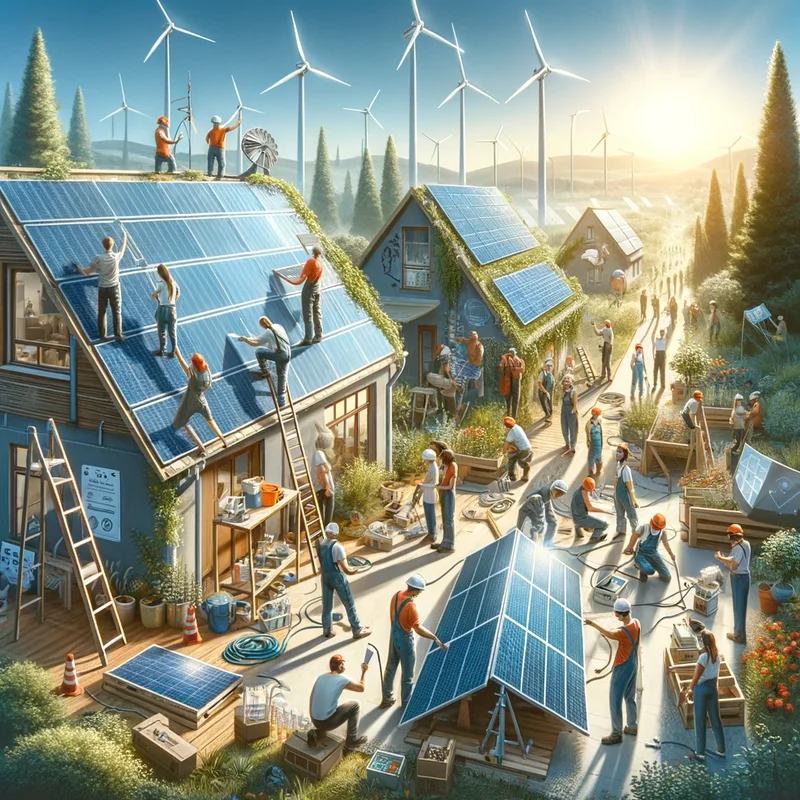
Of course, a project this big inevitably ran into friction. The fact sheet is full of the predictable political maneuvering: a new administration hostile to renewables, an executive order pausing projects, the appointment of an oil industry lobbyist to head the very agency in charge of the land. But there was local opposition, too. Residents of the tiny Esmeralda County, population 720, worried about their "sense of freedom," the desert vistas, and the local bighorn sheep population.
And you know what? They were right to be concerned. This is our moment of ethical consideration. We can’t just bulldoze the future into existence. Building something on the scale of a city requires a new kind of social engineering to go along with the electrical engineering. How do we build these clean energy powerhouses in a way that honors the local environment and the communities that call it home? That isn’t a reason to stop; it’s the next fascinating, complex problem for a new generation of designers and engineers to solve.
The Inevitability of an Idea
The Trump administration can cancel a permit. It can halt an environmental review. It can post all the angry Truth Social messages it wants about “farmer destroying Solar.” But what it can’t do is cancel the blueprint. It can’t erase the engineering plans. It can’t kill the economic and physical reality that the sun is the most powerful and reliable energy source we have.
Killing a project like this is like trying to stop the tide by yelling at it. The momentum is just too great. The Department of the Interior can try to wrap projects in red tape, and the White House can try to roll back tax credits, but the fundamental math doesn't change. Solar technology is getting exponentially cheaper and more efficient. The economics are already screaming in its favor.
What the cancellation really does is throw down a gauntlet. It crystallizes the challenge. Now, the brilliant minds at places like NextEra and Arevia Power, and the thousands of engineers and scientists working in this field, have a new set of design constraints. The question is no longer just "Can we build it?" The question is now, "How do we build it so intelligently, so efficiently, and so respectfully that it becomes politically unstoppable?" How do we make the next Esmeralda 7 even better?
This is the kind of grand challenge that will define the coming decades. These are the kinds of epic attempts that become legendary renewable energy projects for students to dissect and learn from for years to come. The lessons learned from Esmeralda 7’s failure will inform the design of its successors, making them more resilient, more integrated, and ultimately, more successful. The ghost of this canceled project will haunt—and inspire—every major energy project that comes after it.
The Blueprint Is More Powerful Than the Bulldozer
So, no, I’m not mourning Esmeralda 7. I’m celebrating it. A government filing can declare it "cancelled," but an idea this powerful can't be contained by a piece of paper. The blueprint is now out in the world, a testament to our soaring ambition. The vision of a solar city in the desert is no longer a fantasy; it's an engineering proposal that was just a few signatures away from reality. The political winds will shift again—they always do. But the laws of physics and economics are far more constant. The future isn't cancelled; it just went back to the drawing board to get even smarter. And when it comes back, it will be unstoppable.