

The Founder's Paradox: Quantifying the Unquantifiable Loss of Doug Lebda
When the market opened on Monday, it priced the sudden death of LendingTree founder and CEO Doug Lebda at just over 2%. Shares of the Charlotte-based company dipped on the news of his fatal ATV accident, a cold, numerical reaction to a deeply human tragedy. The market, in its impersonal way, was attempting to calculate the value of the man who single-handedly willed the company into existence.
The initial data point—that 2.1% drop, to be precise—suggests a contained risk, an event priced-in with minimal disruption. And on paper, the corporate governance machinery whirred to life exactly as it should. The company announced that Scott Peyree, the COO and president, would immediately step into the CEO role. Lead independent director Steve Ozonian would become chairman. It was a clean, decisive transition designed to project stability and calm investor nerves. Peyree’s statement affirmed the continuity of a “shared vision.”
This is the kind of swift action that boards of directors drill for. I’ve analyzed dozens of emergency succession announcements, and the efficiency here is textbook. There was no power vacuum, no public uncertainty about leadership. From a purely operational standpoint, it was a successful execution of a crisis management plan. But this is where the simple numbers on the screen and the complex reality of a founder-led company begin to diverge. The market can price the succession of a CEO. But can it truly price the removal of the company’s foundational spark?
The Architect and the Algorithm
To understand the long-term discrepancy, you have to go back to 1996. Doug Lebda wasn't a banker or a fintech bro looking for an angle. He was a consultant at PriceWaterhouseCoopers who, like millions of Americans, found the process of getting his first mortgage to be an opaque, frustrating nightmare. He felt powerless. That specific, personal pain point became the company's entire premise. As he told The Daily Item in 2017, his insight was simple: there had to be a more efficient way for consumers and lenders to find each other.
LendingTree wasn’t built to be a bank. It was built to be a marketplace, an "Expedia for loans," where lenders compete for the consumer’s business, not the other way around. This model, which now seems obvious, was revolutionary. It flipped the power dynamic. It was an algorithm born from an annoyance. Lebda’s core philosophy, articulated to The Wall Street Journal, was starkly simple: “All of my ideas come from my own experiences and problems.”
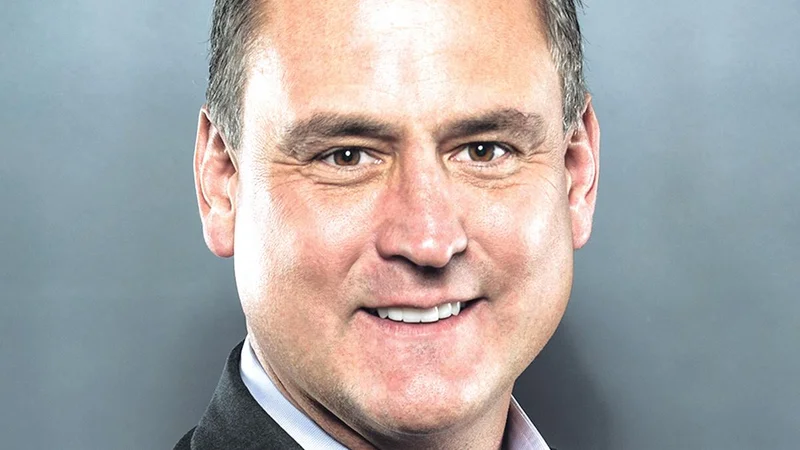
This is the founder’s premium—an unquantifiable asset that never appears on a balance sheet. It’s the ability to see the entire industry through the eyes of the frustrated customer you once were. A hired CEO, no matter how competent, is tasked with optimizing the machine. A founder is the one who invented the machine in the first place because they were tired of walking. The company’s entire DNA, from its consumer-first marketing to its portfolio of brands (which includes CompareCards and Value Penguin), stems from that initial, authentic frustration.
The succession plan ensures the machine keeps running. Scott Peyree is, by all accounts, a capable operator. But who now serves as the company's chief frustration officer? Who will have the credibility, the moral authority, and the gut instinct to overhaul a product line or pivot the entire company based on a single bad personal experience? These are the questions that a 2% stock dip doesn't even begin to answer.
The tragedy itself occurred on Lebda’s farm in Mill Spring, North Carolina, a detail that former Governor Pat McCrory noted he was incredibly proud of. It’s a bitter irony that the man who built a digital empire designed to simplify life’s biggest financial hurdles died in a sudden, physical accident. The U.S. Consumer Product Safety Commission data on off-highway vehicles is grim, with an annual average of over 800 deaths, a stark reminder of tangible risk in a world of abstract finance. Lebda, at 55, became part of a tragic statistic.
The statements from his family and colleagues paint a picture of a man whose energy was "magnetic." His wife, Megan, spoke of a heart so big "it seemed to have room for everyone he met." These are not just platitudes; they are descriptions of a specific type of leadership. Charisma, passion, and a founder's story are powerful economic drivers. They attract talent, secure partnerships, and build a brand that customers trust. Now, that narrative force is gone.
LendingTree is a mature public company. It survived the dot-com bust, an acquisition by IAC, and a spin-off. It has a strong management team. But it has now lost the variable that could never be replicated. The company’s future growth depends on its ability to continue innovating—to find the next consumer frustration and build a marketplace around it. The question is whether that skill was institutionalized, or whether it just left the building.
An Irreplaceable Variable
The market’s reaction was logical but shortsighted. It saw a competent successor and a stable board and concluded the damage was minimal. But my analysis suggests the real risk isn't in the next quarter's earnings; it's in the next decade's vision. LendingTree didn't just lose a CEO; it lost its primary R&D engine, the source code of its entire corporate identity. You can replace an executive's function, but you cannot replace a founder's instinct. The most critical asset the company had was Doug Lebda’s memory of what it felt like to be a confused homebuyer, and that asset is now permanently off the books.
Tags: doug lebda