

Alright, folks, let's talk Outback Steakhouse. Headlines are screaming about closures, right? "Outback Steakhouse Closing More Restaurants!" "Diners Scrambling!" It sounds like the end of an era, another chain restaurant biting the dust. But hold on. Let's not bury the bloomin' onion just yet. I think something far more interesting, far more radical, is happening here.
A Bold New Blueprint
Bloomin' Brands is calling it a "turnaround strategy," and yeah, that sounds like corporate jargon. But dig a little deeper. Twenty-one restaurants closed, with another 22 slated to go as leases expire. That's the headline. But the real story? A $75 million reinvestment. Remodels for every single one of the remaining 670 locations by 2028. New menus, better-quality steaks, more attentive service.
This isn't just about cutting losses; it's about surgically removing the underperforming bits to make way for something new. Imagine it like this: Outback is shedding its old skin, like a snake, to reveal a sleeker, more agile version underneath. The company isn't just trimming fat; it's reallocating resources, focusing on quality over quantity. They're pausing shareholder dividends to free up cash for restaurant investments and debt repayments. That's a serious move, folks.
Why? Because Bloomin' Brands CEO Mike Spanos gets it. "Outback Steakhouse has incredible brand equity," he says. "It is the pioneer of the casual steakhouse industry." He sees the potential, the brand awareness. They aren't abandoning ship; they're doubling down on what made Outback great in the first place.
The question is, can they pull it off? Can Outback reclaim its crown in a world where LongHorn and Texas Roadhouse are thriving? I think they can, but it requires more than just a fresh coat of paint and a new appetizer. It requires a complete reimagining of the dining experience.
And that's precisely what they seem to be doing. Brighter interiors, smaller kitchens, bigger order pickup stations. They're not just updating the decor; they're optimizing the entire operation for the modern diner. They're acknowledging that the world has changed, that people want convenience, quality, and an experience that's worth leaving the house for.
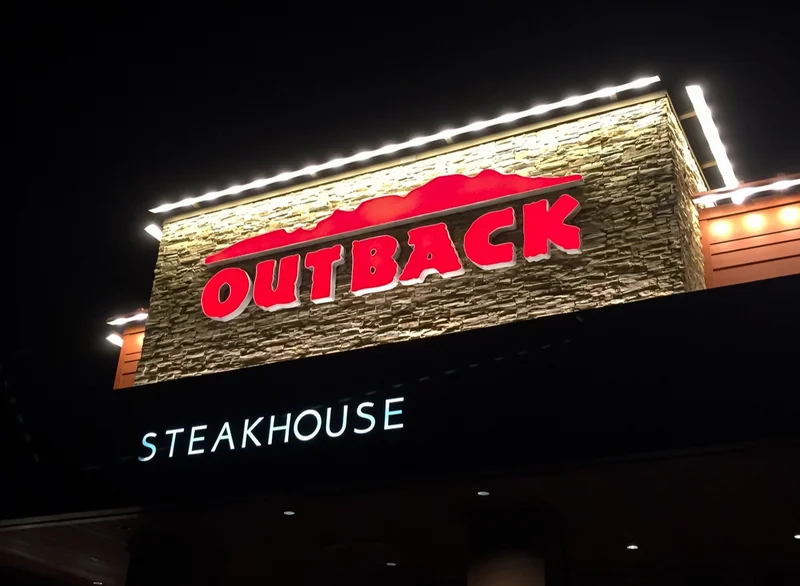
What does this mean for the average consumer? Well, for starters, it means you might have to drive a little further to get your Outback fix. But it also means that when you do go, you're going to get a better steak, better service, and a more enjoyable atmosphere. It's a trade-off, sure, but I think it's a worthwhile one.
It's also a recognition of the changing landscape of the restaurant industry. Chains like Denny's, Ruby Tuesday, Red Lobster, and even TGI Friday's are all facing similar pressures. Denny's is closing 150 locations, Ruby Tuesday is struggling to recover from bankruptcy, and Red Lobster is shuttering over 100 stores. This isn't just an Outback problem; it's an industry-wide reckoning. Denny’s, Outback Steakhouse & Ruby Tuesday abruptly closing dozens of locations leaving diners scrambling
But Outback's response is different. While others are simply downsizing or fading away, Outback is actively reinventing itself. They're not just reacting to the market; they're trying to lead it.
And that, my friends, is what makes this story so exciting. It's not just about saving a restaurant chain; it's about the possibility of a restaurant chain evolving, adapting, and becoming something even better. It reminds me of the early days of personal computing. Companies like IBM and Xerox were too slow to adapt, and they were overtaken by smaller, more agile players like Apple and Microsoft. Outback has the chance to avoid that fate.
One thing to keep in mind, though, is that this transformation won't be easy. It's going to take time, money, and a lot of hard work. And there's no guarantee of success. But I, for one, am rooting for them.
What if this is a model for other struggling chains? What if Outback's "turnaround strategy" becomes a blueprint for the entire restaurant industry?
The Dawn of Restaurant Renaissance
It's not just about steak; it's about the future of dining. It's about the possibility of creating something truly special, something that resonates with people on a deeper level. And that's a future worth fighting for.