An Unforced Error of Cosmic Proportions: NASA's Shutdown vs. 3I/ATLAS
======================================================================
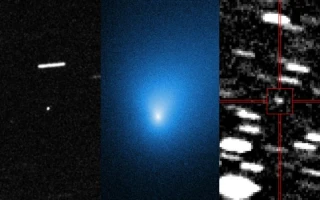
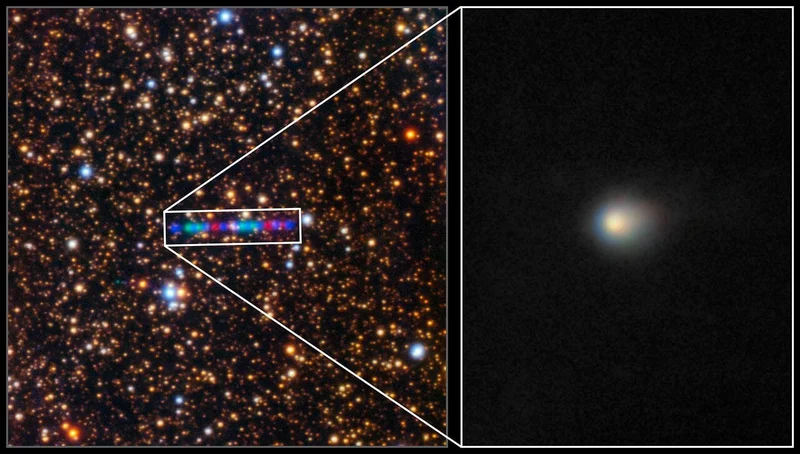
An object designated 3I/Atlas is currently moving through our solar system at approximately 193,000 miles per hour. It is only the third interstellar visitor we have ever confirmed. Its trajectory is a clean, predictable line of gravitational physics, a perfect clockwork mechanism slicing through the void.
Back on Earth, our own trajectory is anything but. Just as this scientifically invaluable object makes its closest approach, the U.S. federal government has entered a state of operational paralysis. NASA has furloughed 83% of its workforce. That’s more than 15,000 scientists, engineers, and mission specialists sent home, their monitors dark, their projects frozen.
The juxtaposition is almost too perfect, a cosmic joke delivered with a straight face. The universe has presented us with a fleeting, data-rich anomaly—a sample from another star—and we have chosen this exact moment to lock the doors to our own laboratory.
A Calculated Opportunity vs. An Uncalculated Shutdown
Let’s be precise about what’s at stake. 3I/Atlas isn’t just another rock. Its composition, its outgassing, its very trajectory contain information about its home star system. It’s a messenger in a bottle, and our planetary probes are the only tools we have to read the message before it tumbles back into the interstellar dark.
The European Space Agency, to its credit, is on the job. Its Mars orbiters and the Jupiter-bound Juice spacecraft are being aimed at the comet. They will collect what data they can. But this is like trying to understand a complex crime scene with only one detective on the case. NASA’s fleet—its Mars Reconnaissance Orbiter, its rovers on the surface—were meant to be a critical part of a coordinated, multi-point observation campaign. Without the ground teams to direct them, task them with new sequences, and analyze the incoming data streams in real-time, these assets are largely running on autopilot. The hardware is in orbit, but the human intelligence that makes it effective has been benched.
The scale of this shutdown is significant. We’re talking about a workforce reduction of 83%—to be more exact, more than 15,000 of the agency's 18,000-plus civil servants. This isn’t just trimming the fat; it’s amputating the central nervous system. I’ve looked at hundreds of corporate restructurings, and a sudden, unplanned operational halt of this magnitude would be considered an act of catastrophic self-sabotage. Here, it’s just another Tuesday in Washington.
This operational failure raises a number of immediate, and frankly, unanswerable questions. What specific observational sequences were planned by NASA that are now lost forever? How much more precise could our understanding of the comet’s composition be with the combined, real-time power of both ESA and NASA instruments? The window to gather this data is not years, but weeks.
The entire situation is a perfect, if painful, analogy for institutional dysfunction. It’s like building the world’s most sophisticated supercomputer and then unplugging it during the one calculation it was designed to solve, all because of an argument over the building’s electricity bill. The asset is there, but the will to operate it has vanished.
An Exercise in Risk Mismanagement
Adding a layer of theatricality to the situation is Harvard’s Avi Loeb, who recently warned the U.N. of a potential “Black Swan Event” associated with the object. Loeb has a reputation for provocative statements, but the core of his argument is a simple exercise in risk assessment. An object of unknown origin and composition, with a nucleus size estimated to be anywhere from 1,444 feet to 3.5 miles across (a range of uncertainty that is itself a major data gap), is by definition an outlier. Shutdown Forces NASA Furloughs While Avi Loeb Warns U.N. of Black Swan Risk As 3I/ATLAS Nears Perihelion
While 3I/Atlas poses no direct threat to Earth—its closest approach in December will be a distant 167 million miles (a comfortable buffer, roughly 1.8 times the distance from the Earth to the Sun)—the failure to study it is a failure in intelligence gathering. Every interstellar object is a data point. The more data points we have on their typical size, speed, and composition, the better our models will be for the day one does appear on a less convenient trajectory.
And this is the part of the analysis that I find genuinely puzzling. From a purely analytical standpoint, ignoring a low-probability, high-impact variable is the cardinal sin of risk management. The probability of 3I/Atlas being anything other than a lump of ice and rock is exceedingly low. But it is not zero. And the cost of gathering data on it is infinitesimally small compared to the potential cost of being surprised by a future object.
We are voluntarily blinding ourselves. The shutdown ensures that thousands of the world's most qualified experts cannot apply their full capabilities to this problem. They can’t collaborate, they can’t run new models, and they can’t re-task billions of dollars of space-based hardware in response to new information. So, while the comet itself isn't a Black Swan, our response to it certainly is: a completely unpredictable, self-inflicted failure with high-impact consequences for science. What is the value of the data we are now guaranteed to lose? Is it a few million dollars in scientific grants? A few billion? Or is it something truly priceless?
The Cost of an Unforced Error
Ultimately, the story of 3I/Atlas isn't about astronomy. It's a case study in unforced errors. The universe provided a test. It wasn't a test of our technology or our intelligence, but of our discipline. It asked a simple question: when a rare opportunity presents itself, can you maintain focus long enough to seize it? The data is now coming in, and the answer appears to be a definitive "no." We have world-class assets in the field, but we have chosen to abandon the command post. The scientific loss is incalculable, and it was entirely, maddeningly, avoidable. The universe sent us a free sample from another world, and we left it on the porch to spoil.