

Every so often, you see a signal in the noise. It’s not a revolution announced with fireworks and a press conference. It’s quieter. A subtle shift in the data, a new pattern emerging from the chaos that makes you sit up and realize the whole system is about to change. For years, we’ve watched professional tennis operate on a brutal, almost predictable algorithm: identify prodigies young, isolate them in academies, and push them onto the tour before they’re old enough to vote, hoping they don’t burn out.
Then, a name like Jacob Fearnley appears in the feed.
In 2025, he became one of the most talked-about names in the sport, and not just because he sent a shockwave through the Australian Open by dismantling Nick Kyrgios in straight sets. It’s not even just about his impressive climb into the world’s top 50. What I’m seeing in the Jacob Fearnley phenomenon is something far more profound. It’s a new architecture for building a world-class athlete—a more resilient, adaptable, and intellectually grounded model that could redefine the very pathway to the top. This isn't just another tennis story. This is a glimpse into the future of human potential.
The Collegiate Crucible: A New Development Stack
Let’s be clear. The old model of forging tennis champions worked, but at a tremendous cost. It was a monolithic system, like a giant mainframe computer from the 1970s—powerful, but rigid and incredibly fragile. For every success story, how many brilliant young players flamed out, broken by the loneliness and immense pressure of the tour? It was a system that prioritized groundstrokes over growth, rankings over resilience.
Fearnley’s journey represents a paradigm shift. He came up through the American college system at Texas Christian University. Now, this isn't a new path, but the results we're seeing feel like a version 2.0 release. Think of the college experience not as a detour, but as a crucial development environment. It’s a place to beta-test your skills, not just on the court, but in life. You’re part of a team, accountable to others. You’re forced to manage time, academics, and high-stakes competition simultaneously. It builds a different kind of mental wiring—a distributed network of resilience rather than a single, fragile processing core.
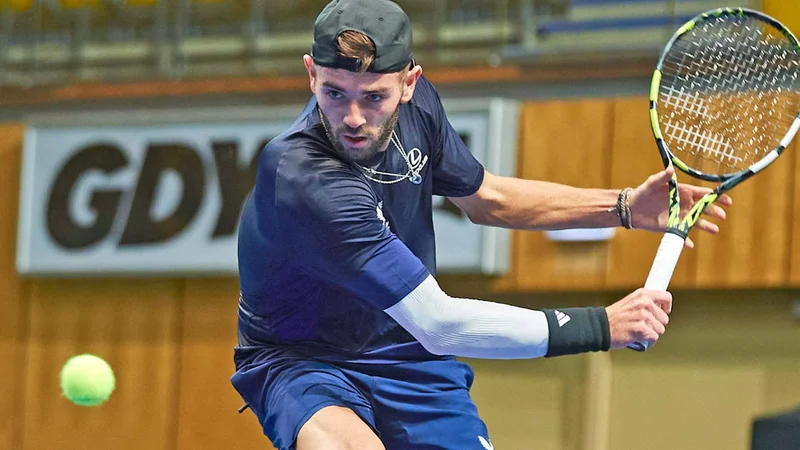
When I see Fearnley on the court, I don't just see a player with a wicked backhand and endorsement deals from Adidas and Wilson. I see an athlete who has already weathered storms in a controlled environment. The pressure of an NCAA final is a different beast than a Futures tournament in some forgotten corner of the world, and it arguably prepares you better for the bright lights of a Grand Slam. This is the kind of breakthrough that reminds me why I got into this field in the first place—watching a new, better system prove its worth in real-time. The LTA’s support is the hardware, but his collegiate experience? That’s the sophisticated operating system running the show. Are we finally witnessing the obsolescence of the teen-prodigy-or-bust model? Could this be the blueprint for a more sustainable, and frankly, more human, way to build a champion?
Processing the Pressure Protocol
The real test of any new system isn't when things are going well. It's when an unexpected variable is introduced under maximum stress. For Fearnley, that moment came at the 2025 US Open, under the lights, against one of the giants of the game, Alexander Zverev. Mid-match, Zverev offered an apology for some on-court issue. It was a moment ripe for emotional disruption, a potential crack in the focus of a younger player.
Fearnley’s reaction was fascinating. He later stated, with almost startling clarity, that the apology served as a distraction.
Imagine the scene for a moment. The low hum of the New York crowd, the squeak of shoes on the hardcourt, the immense psychological weight of a Grand Slam match against a top-tier opponent. In that pressure cooker, his mind wasn't derailed by the emotional gesture; it analyzed it, classified it as junk data, and flagged it as a system-slowing interruption. When I read that, I saw an athlete running a different kind of mental software. This wasn't the petulance of a rattled player. It was the calm, diagnostic report of a high-performance machine identifying a bug in the code.
This is the kind of high-speed emotional processing that you don’t learn in an isolated academy—it’s forged by navigating complex social and competitive ecosystems. It’s the difference between a simple calculator and a learning algorithm. The old guard might have been thrown off, gotten angry, or even lost the thread of the match. Fearnley simply processed the event and moved on. We’re talking about a level of mental fortitude and self-awareness that is, frankly, staggering for a player in their breakout year—it means the gap between raw talent and championship-level composure might be closing faster than we can even comprehend. But as we celebrate this new model of unflappable athlete, what responsibility do we have to ensure we don't just create a new, impossible standard of emotional stoicism? Where does the human element fit into this high-efficiency protocol?
A New Blueprint for Greatness
So, what is the real Jacob Fearnley prediction? It’s not about how many Grand Slams he might win or what his net worth will be in five years. The real story is that he is the proof-of-concept. He’s the walking, serving embodiment of a better way forward. His rise isn't a fluke; it's the result of a smarter, more holistic development path that values maturity and education alongside athletic prowess. We are watching the emergence of a new kind of champion, one built not just to win, but to endure. The future isn't about finding the next prodigy; it's about building them better.
Tags: jacob fearnley