

So, another earnings season, another masterclass in the art of lowering the bar so you can triumphantly step over it. Yesterday morning, the entire financial world was supposedly on the edge of its seat, waiting for the big three—JPMorgan, Citi, and Wells Fargo—to pull back the curtain on their Q3 numbers. The pre-game chatter was the usual mix of cautious optimism and thinly veiled anxiety.
Wall Street’s so-called experts, the guys in the thousand-dollar suits who get paid to make educated guesses, were putting out their "Moderate Buy" and "Hold" ratings. For Wells Fargo, the consensus was basically a shrug. Citi analyst Keith Horowitz slapped a "Hold" on the stock, muttering about "limited upside" and "better risk/reward opportunities" elsewhere. The stage was set for a perfectly mediocre performance. JPM, WFC, C: Big U.S. Banks Will Report Earnings Tomorrow. Key Things to Know
And then, offcourse, Wells Fargo came out and "beat expectations." The stock popped. The headlines screamed. And I just sat here, staring at my screen, wondering if I’m the only one who sees the strings on the puppets.
The "Surprise" Beat That Fooled Absolutely No One
Let's break down this stunning victory, shall we? Wells Fargo reported earnings of $1.66 per share. The hallowed "consensus" from the analyst crowd was $1.54. They also beat on revenue, pulling in $21.44 billion against an expected $21.15 billion. The stock jumped almost 4% on the news. Champagne corks were probably popping in San Francisco. Why Is Wells Fargo Stock Trading Higher Today - Wells Fargo (NYSE:WFC)
Give me a break.
This isn't a victory; it's a perfectly executed magic trick. It's like a student telling everyone they're going to fail a test, then pulling a C+ and acting like they just won a Nobel Prize. The game isn't about achieving excellence; it's about managing expectations so that even a painfully average result looks like a home run. They beat revenue expectations by what, a little over 1%? And we're supposed to throw a parade?
This is a bad look. No, 'bad' doesn't cover it—this is a five-alarm piece of corporate theater. They want you to focus on the "beat" so you don't look too closely at the details. They proudly announced that their provision for credit losses—the money they set aside for loans that are about to go belly-up—decreased by 36%. That sounds great, right? It means their customers are in better financial shape!
Or does it? Is the American consumer suddenly flush with cash, or did the bank's risk department just decide to roll the dice and hope for the best? Are they genuinely seeing stronger credit performance, or are they just kicking the can down the road to make this quarter's numbers look a little shinier? These ain't questions you'll see answered in the press release.
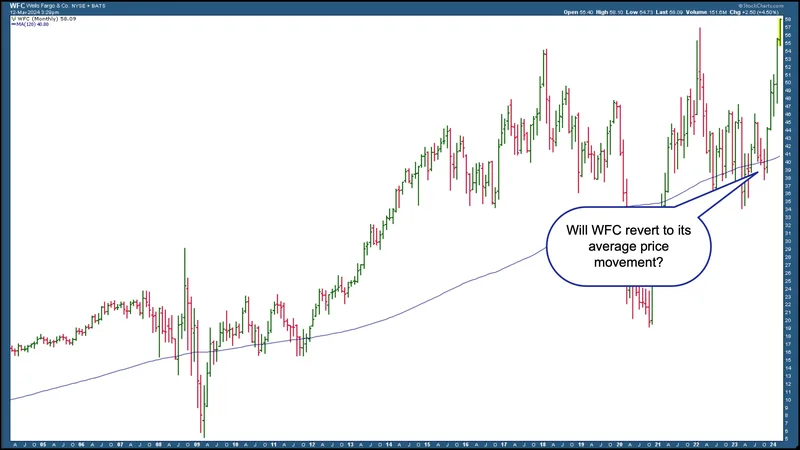
And the revenue itself... a 5% year-over-year increase. In an economy supposedly juiced on inflation, where the price of everything has gone up, a 5% revenue bump for a multi-trillion-dollar bank feels less like a sign of robust health and more like they’re just barely keeping pace. They're squeezing more "asset-based fees" out of their wealth management clients and celebrating a bump in investment banking. It’s just moving money around, finding new ways to charge for the same old services. I got charged a $3 "paper statement fee" last month from my own bank, which is probably buried in some line item they call "noninterest income growth."
Decoding the CEO-Speak
Then came the victory lap from Chairman and CEO Charlie Scharf. You can always count on the C-suite for a quote so polished with PR varnish you can see your own reflection in it.
He said, "While some economic uncertainty remains, the U.S. economy has been resilient, and the financial health of our clients and customers remains strong."
Let me translate that for you from corporate jargon into plain English: "Please don't panic. Things aren't a total dumpster fire at this exact moment, so keep your money right where it is. We're fine. You're fine. Everything's fine." It's the financial equivalent of a flight attendant telling you to remain calm while the cabin is filling with smoke.
What’s hilarious is that this statement comes out at the same time JPMorgan’s own CEO, Jamie Dimon, is out there warning about "trade uncertainty" and "sticky inflation." So which is it? Is the economy a resilient stallion, or a sick old horse about to collapse? Can they both be right? It feels like they're just telling us whatever they think we need to hear to keep the market from spooking.
They talk about strong growth in auto loans and credit card spending, but in the same breath, they mention declines in commercial real estate and residential mortgages. It's a shell game. They're propping up one part of the business while another sags, and hoping nobody notices that the foundation is cracking. They raised their return on equity target, which is just another way of saying they plan to squeeze even more profit out of every dollar you give them, and at the end of the day...
Look, I'm not rooting for them to fail. But I am so incredibly tired of the performance. The analysts set the low bar, the bank barely clears it, the stock gets a little sugar high, and the whole cycle repeats in three months. It’s a closed loop of self-congratulation that has almost nothing to do with the real economy that the rest of us live in.
So We're All Just Pretending, Then?
This isn't an earnings beat. It's a participation trophy. We're celebrating a bank for doing a slightly-less-bad job than a handful of analysts predicted they would. The fact that this passes for good news tells you everything you need to know about the state of the system. It’s a fragile, carefully managed illusion designed to keep the machine humming and the stock charts pointing up and to the right. Don't buy the hype. Don't pop the champagne. Just watch the show and remember that it's all part of the act.
Tags: wfc stock